Get Full Government Meeting Transcripts, Videos, & Alerts Forever!
Get email alerts on the Stakeholder Concerns topic
No spam. Unsubscribe anytime.
Stakeholders press Concord master plan team on wastewater, zoning form and outreach before May 5 kickoff
Summary
At the inaugural meeting committee members pressed consultants and DAM on wastewater transfer timing and capacity, warned about expectation-setting at public events, and debated whether a form‑based regulatory approach can be implemented using traditional zoning.
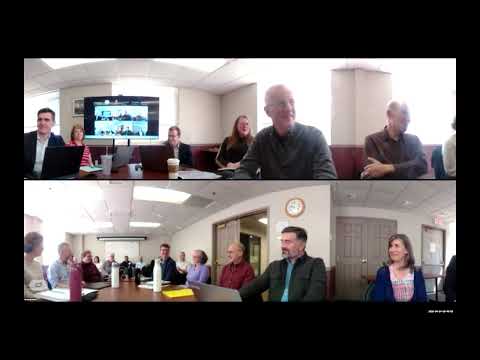
Concord committee members used Tuesday’s inaugural MCI Master Plan Committee meeting to press consultants and DAM representatives on three issues they said must be clarified before broad public outreach: the wastewater treatment facility’s capacity and transfer timing, how a regulating (form‑based) plan would be implemented under Massachusetts zoning law, and how outreach will reach underrepresented groups.
“There's a deed restriction on that parcel,” a committee member said when the phasing and Junction Village were discussed; presenters said Junction Village is conceptually in scope but that deed and CHDC processes could constrain accelerated phasing.
On procurement and disposition, Paul Hogan, DAM’s senior project manager, said: “It's expected that that would be a DAM RFP,” and added the RFP language will reflect the zoning and priorities the town sets through this process.
Committee members repeatedly raised wastewater concerns. Alan Cathart, the town’s public‑works director, and consultants said the wastewater treatment plant is an existing operational facility that must be maintained; engineering work and a separate DAM/town negotiation are ongoing to clarify capacity and transfer options. The consultants said environmental and remediation analysis (e.g., hazardous materials investigations) is primarily the property owner’s responsibility and can be tied to capital projects or eligible tax credits.
Several members warned about framing and precedent at the May 5 public kickoff: if the team shows examples that differ materially from the final regulating plan, “it might backfire at the town meeting,” one member said. Others asked that both the May 5 keynote and the June design‑week events be hybrid or remote to avoid exclusion and suggested mailing flyers and targeted outreach to renters and underrepresented residents.
On zoning mechanics, members raised the prospect that the regulating plan they want to produce—a plan that prescribes where streets, frontages and public realm controls are placed—resembles a form‑based code that can be difficult to implement under conventional zoning. Consultants described a hybrid approach: produce a regulating plan that becomes a reference for zoning language, and use RFP and deed/purchase‑and‑sale provisions to bind developer outcomes where statutory zoning tools fall short.
The team and committee agreed on next steps for transparency and outreach: update the stakeholder list compiled during the vision‑plan phase; promote the May 5 kickoff and prepare contingency overflow plans; and schedule focused stakeholder meetings during the June design week to ensure diverse representation and technical input.