Get Full Government Meeting Transcripts, Videos, & Alerts Forever!
Get email alerts on the Alternative Education topic
No spam. Unsubscribe anytime.
District outlines expanded alternative-education continuum to keep more students in-district
Summary
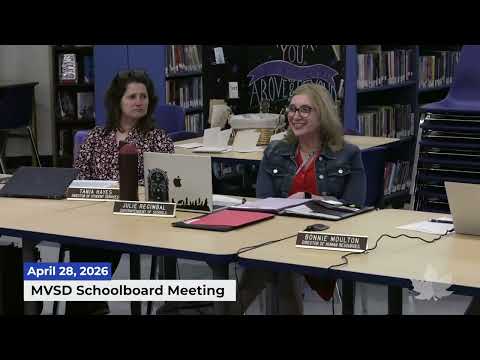
Director of student support services Tanya Hayes presented a district plan to strengthen alternative programming — from preschool learning lofts to high-school independent study — aiming to fill the 'missing middle' and reduce out-of-district placements; board endorsed relocating RISE onto campus to bolster that work.
The Missisquoi Valley School District #89 described steps Monday to expand and better coordinate its alternative education and special-education continuum so more students can be served in-district.
Tanya Hayes, the district's director of student support services, told trustees the state’s least restrictive environment (LRE) targets and a recent Agency of Education review show Vermont districts are strong at inclusion but often lack a robust “middle” of supports, resulting in relatively higher rates of out-of-district placements. "Our vision is to provide relevant, responsive, engaging academic and social learning opportunities to ensure kids are learning at high levels," Hayes said, framing the district’s strategy to add and refine programs.
Hayes walked the board through existing and newer options across grade bands. At the early-elementary level a "learning loft" supports students with developmental and communication needs through a blended schedule and targeted small-group instruction. For grades 3–6 the district created a new district-level alternative classroom staffed this year by Hannah Walton, which has operated as pull-outs, guest-teaching lessons and an "outing club" that pairs skill-building with outdoor projects. Quest serves middle-school students; Field Studies remains the district’s longstanding outdoor-education program at the high school. At the high-school level the district shifted existing funds to hire an independent-study teacher, Andrew Hathaway, to provide one-to-one and small-group individualized programming for students who otherwise might be placed out of district.
Hayes said the district is convening program leads monthly to align practices, identify gaps and ensure vertical continuity so students do not encounter a year without a program option. "We want to build our continuum so we don't have kids falling off the pieces along the way," she told the board.
Board members asked about program capacity and possible expansion of Field Studies; Hayes cautioned that scaling some models can dilute their effectiveness but said the district is exploring ways to spread practices and add slots where it makes sense. She also described the state targets administrators use to monitor LRE: for example, AOE targets a high percentage of students (around 80% or more of the day) in general education settings; the district reported meeting that target in recent AOE reports and is monitoring the smaller cohorts who need more restrictive placements.
Hayes and colleagues connected program development to a facilities decision approved by trustees at the same meeting: moving the RISE program from a rented site back onto campus by reconfiguring an unused wood shop at an estimated cost of $130,318. Administrators said the move will improve students’ access to nursing, counseling and general-education staff, eliminate rental costs and reduce busing expenses (estimated savings about $50,000 per year), helping the district keep services in-house.
Hayes also received thanks from trustees and colleagues; several board members noted the presentation may have been her final one before departing the district, and they thanked her for her leadership in building alternative programming.
What's next: the alternative-education team will continue monthly coordination, pursue place-based professional development, and return with data and implementation plans as programs are expanded or reallocated. Trustees asked administrators to monitor capacity, track outcomes for students kept in-district, and provide updates on the RISE reconfiguration timeline.