Get Full Government Meeting Transcripts, Videos, & Alerts Forever!
Get email alerts on the Career Technical Education topic
No spam. Unsubscribe anytime.
CTE subcommittee sets quarterly monitoring, highlights program growth and placement challenges
Summary
The CTE subcommittee heard a timeline to report student outcomes quarterly, was told CTE programs will expand (about 18 to 33 programs), heard that completers overwhelmingly graduate, and discussed limits tracking graduates into jobs; staff will add two work‑based learning coordinators on July 1.
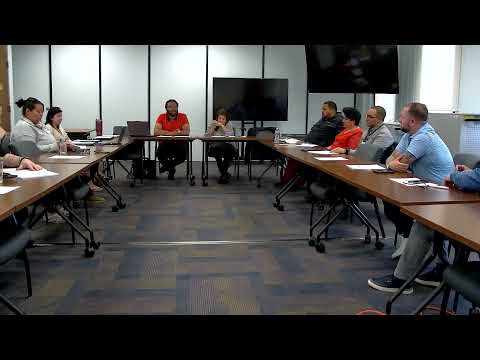
The Career and Technical Education (CTE) subcommittee reviewed a proposed implementation timeline Thursday for quarterly reporting to the full school board on CTE enrollment, demographic representation, program growth and credential attainment.
Deputy Superintendent Paula, who led the presentation, said the board’s adoption of CTE as one of five district goals requires regular reporting: “we will be reporting four times a year, once a quarter, on where we are with how many students have enrolled, how the students fit into the overall makeup demographically,” she said. Paula said the work will track program growth, student completion of work‑based learning and credential attainment.
Ricardo (referred to earlier in the meeting as Rico), the district CTE director, presented program‑level data for 2024–25. He said that all students listed as program completers in the handout were high‑school graduates, and that CTE completers graduate at a much higher rate than the district average: “92% of students are graduating overall on our enrollment,” he said, compared with an overall four‑year district graduation rate of 78% that the committee discussed. Ricardo also reported that 12 students in the dataset were listed as not yet completers: one had dropped out, one completed in a fifth year, and 10 remained enrolled and continuing toward completion.
Committee members flagged practical limits to following graduates after they leave school. Paula said there is no consistent statewide mechanism to track placements and employment after graduation and that tracking usually depends on voluntary alumni reporting, employer partners, apprenticeship registrations and program‑level reporting: “we could have an alumni association … but even that is voluntary,” she said. Subcommittee members noted that some pre‑apprenticeship and apprenticeship programs keep placement records through their registration systems and that employers such as Electric Boat can and do share placement information with schools when agreements are in place.
To strengthen employer connections and follow‑up, the district plans to create two CTE work‑based learning coordinator positions, Ricardo said, with the new roles beginning July 1 to support program pipelines and employer engagement. Staff also said the next full data run will be available in July; speakers referenced April, July and August reporting cycles when describing how the quarterly schedule aligns with graduation and summer‑school completions.
The committee agreed to use quarterly reports as a “guardrail” to watch for disproportionality in program participation by race, gender, special‑education status and multilingual‑learner status. Ricardo said the CTE enrollment charts presented show participation that is “pretty equal” to district demographics; the committee will review those measures each reporting cycle.
The subcommittee did not take formal action on the monitoring timeline; presenters said the material will go to the full school board at its next meeting and the subcommittee will meet again on dates tied to data availability, with July and September mentioned as possible windows.