Get Full Government Meeting Transcripts, Videos, & Alerts Forever!
Get email alerts on the Environment Salmon Recovery topic
No spam. Unsubscribe anytime.
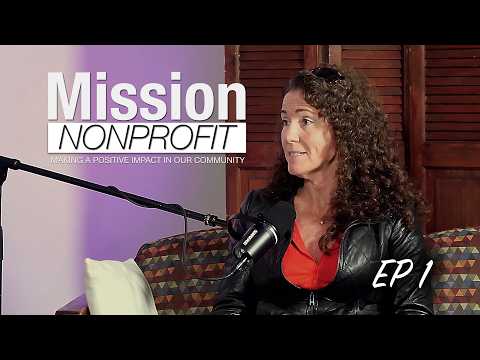
Mindy Harlow outlines Hood Canal Salmon Enhancement Group’s education, monitoring and volunteer programs
Summary
Mindy Harlow, a representative of the Hood Canal Salmon Enhancement Group, described the organization’s habitat restoration, youth camps, paid internships and volunteer fish-monitoring work, and invited residents to a Martin Luther King Jr. Day planting at the Union River Estuary.
Mindy Harlow, a representative of the Hood Canal Salmon Enhancement Group, described the nonprofit’s multifaceted work restoring habitat, running education programs and tracking salmon populations, and she invited community volunteers to an upcoming planting on the Union River Estuary.
The Hood Canal Salmon Enhancement Group focuses on salmon recovery, habitat restoration and environmental education. “The Hood Canal Salmon Enhancement Group is one of 14 regional fisheries enhancement groups that works throughout the state of Washington,” Harlow said, adding that the groups were formed by the Washington state legislature in 1990 to support salmon recovery efforts.
Harlow highlighted several program areas the organization operates from its Salmon Center property, including a 38-acre certified organic farm next to the Union River Estuary used for sustainable-agriculture classes and a Farm Stewards summer program for children. “We own a 38 acre certified organic farm that is right at the end of the Union River, so in the right next to the Union River Estuary,” she said, describing adult classes and a camp for roughly 7- to 10-year-olds that teaches low-impact gardening and beneficial insects.
For older children, the group offers salmon camps for roughly 11- to 15-year-olds that take participants into estuaries and forests for hikes and hands-on activities. Harlow said the programs aim to connect youth to local ecosystems and to careers in natural resources: “We’re really trying to help create the next generation of environmental stewards.”
Volunteer-powered monitoring is a major component of the group’s work. Harlow said adult salmon runs on the Union River are monitored from August 15 through October 15 and that the effort requires continuous staffing: “That requires a 24 hour manning of that trap,” she said. In spring, volunteers help count juveniles using a rotary screw trap to measure out-migration. Harlow said those data help the group evaluate whether restoration projects—such as culvert replacements or estuary modifications—are increasing salmon returns and inform grant applications.
Harlow outlined several internship pathways: paid stream-team internships for local high-school graduates (field data collection with a scholarship incentive), college research internships that can earn academic credit, and AmeriCorps positions (about 10½ months) that include an education award. She said interns are paid at a rate slightly above minimum wage and that some complete hours that qualify them for scholarship awards.
The Salmon Center also hosts community partnerships and public programs. Harlow said the Timberland Regional Library is using the Salmon Center classroom for weekly Wednesday storytimes, and the group plans workshops with local conservation districts. The property includes public walking trails adjacent to the Thaler Wetlands and an off-leash dog area; Harlow said the site is open from dawn to dusk.
On Martin Luther King Jr. Day the group will stage a volunteer planting at the Union River Estuary to install native trees and shrubs after restoration work. “We will have a crew of volunteers helping us out on Martin Luther King Junior’s birthday, do a significant, native plant planting on the estuary that day,” Harlow said.
Harlow said donations and volunteer hours are important revenue and match for grants and noted recent funding pressures: “Over the last year, we’ve received significant federal funding cuts,” she said, and added there is state budget uncertainty in the coming year. She encouraged supporters to give money or time, noting volunteer hours can be used as match in grant applications.
To learn more or to sign up as a volunteer or intern, Harlow directed listeners to the organization’s website and social channels: “Our website is pnwsalmoncenter.org,” she said, and added the group also posts on Facebook, LinkedIn and Instagram. The Salmon Center plans an open house in late March as staff work to reopen a classroom and a small museum on the site.
Harlow closed by emphasizing the group’s regional role: “We’re all out here, working to recover salmon populations,” she said, adding that their work extends beyond salmon to broader wildlife and community engagement.
The interview closed with host Maren Turner thanking Harlow and inviting listeners to the next Mission Nonprofit episode.