Get Full Government Meeting Transcripts, Videos, & Alerts Forever!
Get email alerts on the Land Use topic
No spam. Unsubscribe anytime.
Resident urges board to reject Love's truck stop over water, traffic and quality-of-life worries
Summary
At public comment, resident Jim Barry urged the Lassen County Board of Supervisors to oppose a proposed Love's truck stop near Susanville, citing projected daily traffic, heavy water use ("between 7,000 and 9,000 gallons of water per day"), lighting and noise impacts and concerns about security and human trafficking risks.
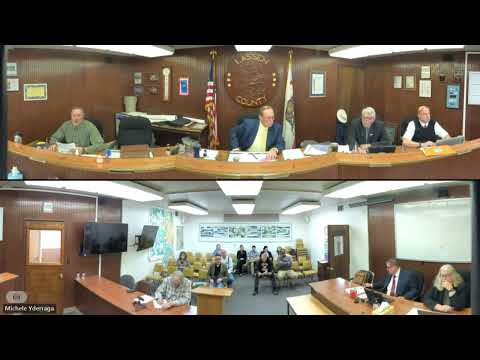
Jim Barry, a resident who spoke during the public-comment period, urged the Lassen County Board of Supervisors to oppose a proposed Love's truck stop near Susanville, saying the project would bring substantial truck and passenger traffic, heavy water use and significant quality-of-life impacts for nearby residents.
"I'm opposed to it," Barry said, citing figures he read from an initial study that he said estimated daily traffic of hundreds of passenger vehicles and trucks and said the facility would use "between 7,000 and 9,000 gallons of water per day." He warned that a 24-hour truck stop could become a magnet for crime and trafficking and pressed the board to require stronger mitigation, including a sound/noise barrier along the railroad grade.
Barry raised multiple community concerns: pressure on local utilities and sewer systems, potential negative effects on existing downtown businesses that already provide fuel and food services, nighttime lighting that could approximate "dawn" levels near homes, and a proposed 24-foot height for fuel canopy or signage he said would alter neighborhood character. He also noted a 14-acre parcel configuration and a referenced 10,000-square-foot repair shop as part of a future development scenario.
The board did not take any formal action during public comment. The county's formal review process and environmental documentation are the channels for addressing the technical issues Barry raised; speakers at the meeting noted that some impacts (for example, idling enforcement) fall under state law or require specific permitting and mitigation. The record will show Barry's remarks as part of the public input on the project.
What happens next: Barry's remarks join other written and oral comments as the county and any permitting agencies consider environmental review and required conditions; no vote or formal county decision on the project occurred during this meeting.