CRA advances draft RFPs for West Atlantic redevelopment blocks with community input sought
Summary
Staff presented draft RFPs for the Southwest 700–800 and Northwest 800 blocks, outlining site sizes, design standards, a 40% workforce housing target on the Southwest side (30% proposed on the Northwest block), proposed incentives up to $1M, and evaluation criteria; the board asked for flexibility on architectural styles and height while prioritizing deeper affordability.
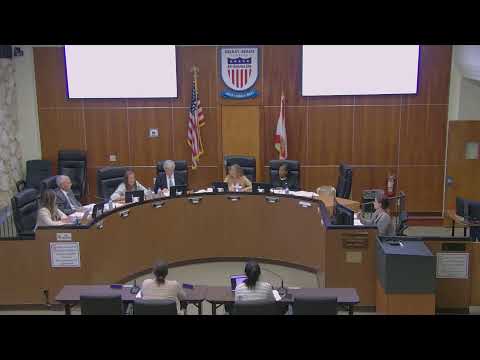
The Delray Beach Community Redevelopment Agency reviewed draft requests for proposals April 28 for key redevelopment sites along West Atlantic Avenue, presenting two mirror RFPs for the Southwest 700–800 blocks and the Northwest 800 block and asking for board input prior to issuing.
Christine Tibbs, Assistant Director, said the Southwest 700 block contains about 1.87 acres and the Southwest 800 block about 1.82 acres; the combined sites and the Northwest 800 block total nearly 15 acres identified in the recently adopted Set Transformation Plan. The draft RFPs reference the city's CBD design standards, green building expectations and workforce housing program. Tibbs said the RFPs ask proposers to follow Article 4 of the LDRs for public‑realm design and to include renderings, site and floor plans, a 10‑year operating pro forma and three similar past projects.
Several public commenters urged flexibility. "Right now the RFP is feeling a little too prescriptive to me," Sarah Selznick, president of Shared Future Foundation, told the board and recommended allowing variances, height trade‑offs for deeper affordability, and a broader AMI band. Kristen Carstarphen of the West Atlantic Redevelopment Coalition also urged clear, measurable community benefits and stronger scoring for local hiring and commitments to community‑serving businesses.
Key board decisions and staff proposals:
- Architectural styles: staff proposed limiting the initial preferred styles to avoid post‑award substitutions; the board agreed to remove Art Deco and "Masonry Modern" from the preferred list to reduce styles seen as out of character for West Atlantic Avenue while keeping flexibility for other acceptable styles.
- Building height: the Set plan emphasizes lower profiles; staff proposed a three‑story preference but the board agreed to leave height flexible, allowing four stories if design and affordability trade‑offs (for example, stepping back taller floors from the avenue) justified it.
- Workforce housing: the Southwest RFP draft proposes 40% of units as workforce/affordable (the Code requires 20% for density bonuses). Board members emphasized prioritizing lower AMI bands (61%–80%) and discussed on‑site versus off‑site compliance options and monetary contributions; staff noted LDRs require an equal distribution between low and moderate income levels to qualify for density incentives.
- Incentives: staff proposed increasing the Development Infrastructure and Assistance Program to cover 75% of eligible site improvements up to $1 million (from prior lower caps) and keeping land lease options under review given CRA sunset timing.
- Evaluation: an initial scoring draft assigns 30 points to development team experience, 40 to the proposed project, 15 to financial structure and 15 to fiscal impact; board members asked staff to ensure community benefits and measurable commitments are clear in the scoring and to return with a revised draft.
Tibbs said staff will incorporate board and public feedback, accept written comments before issuance, and return a revised draft at a future meeting. The board discussed timing tied to available tax credits and incentives and the importance of moving forward without undue delay while preserving meaningful community input.
AI generated
The text on this page is AI generated. Summaries, highlights, analysis, and video transcripts are all produced from the original source material.
AI can make mistakes, so if you spot one, and we will fix it for everyone.
Note: the source content is unaltered by us. Any content source we link to, be it a video, an audio recording, or a document, is presented exactly as its publisher released it. That publisher is usually a government body, sometimes an individual official or another organisation.