Get Full Government Meeting Transcripts, Videos, & Alerts Forever!
Get email alerts on the Active Transportation Grant topic
No spam. Unsubscribe anytime.
Merced pursues $3.5M–$10M Active Transportation grant as residents press for bike‑path safety
Summary
City staff told the BPAC that a California Active Transportation Program application (medium category, $3.5M–$10M) is due June 22; staff seeks community project ideas and potential Measure V match funding while residents and commissioners urged more rider education, improved outreach and project prioritization near schools and key crossings.
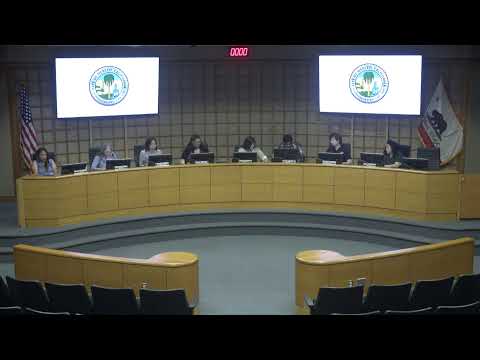
Merced city staff told the Bicycle & Pedestrian Advisory Commission on April 28 that the city is finalizing an application to the California Transportation Commission’s Active Transportation Program (ATP) with a short timeline: the application is due June 22, 2026, and awards are expected around December if the city is selected. Laura Ivans Edge, management analyst in the engineering department, said the city is pursuing a medium‑sized application — a grant in the $3.5 million to $10 million range — and is compiling a project list (A–O) focused on safe routes to school, ADA ramp and sidewalk infill, flashing beacons and HAWK pedestrian signals. "We are doing outreach and compiling sites for improvements," Ivans Edge said, and invited residents to comment on engage.cityofmerced.gov.
Why it matters: the ATP program is a competitive statewide source of funding for walking and bicycling improvements; a successful application could unlock multimillion‑dollar construction projects in Merced and require the city to identify matching funds. Darrell Jordan, the city engineer, said staff will score candidate projects against grant criteria, consider cost and geographic equity, and use a small internal committee to narrow the list. Jordan said Measure V funds are a likely option to provide match but cautioned that match may come from different budget years and would need council approval.
Residents and commissioners pressed staff on safety and outreach. Eli Sachs, who described himself as a registered public‑health nurse, said his review shows far less than 20% of Measure V has been visibly spent on active transportation and asked for records; he also raised a contract‑award concern (he said one repaving contract was awarded to a council member’s family member). "There is a purse to be spent that to me seems not being spent," Sachs said, and asked who can fix the sunken section of the Bear Creek path. Joe Bruscia, a nearby resident, urged simple rider education — teaching cyclists and e‑micromobility users to announce "on your left" — and recommended targeted temporary signage and a newsletter to improve behavior on the Black Rascal Creek path.
On technical choices, the commission debated HAWK signals versus hardened traffic‑calming measures. Several commissioners (including Curtis Thomas and Peggy Shu) urged prioritizing physical infrastructure such as curb extensions, elevated crosswalks and speed tables, especially on corridors near schools where TIMS crash data show child‑injury incidents. "The safest is when bikes and pedestrians are separated," one commissioner said; others urged that multi‑use paths be widened or split with a visible separator to separate faster devices from walkers.
Enforcement and enforcement planning were also discussed. Jordan said the police typically participate in rollouts and monitor new signals during the early enforcement period, but staff noted that automated enforcement (speed cameras) are not typically funded in ATP applications and would not score well for this grant even though the city already has at least one camera generating many citations.
Timing and next steps: staff asked for concentrated community input now because the BPAC’s next meeting falls after the ATP deadline. Jordan said the grant application will go to City Council for approval on June 1 and that staff is assembling a consultant and a project study report required for the application.
Action taken at the meeting: the consent calendar was approved unanimously earlier in the session. The ATP discussion generated several follow‑up requests from BPAC: a compilation of Measure V bicycle/pedestrian allocations, a listing of candidate projects and closer coordination between BPAC, school districts and engineering staff so BPAC’s suggestions can be funneled into the application.
Claims and unresolved allegations: during public comment, Eli Sachs alleged a repaving contract was awarded to a city council member’s family member; staff did not substantively address or resolve that allegation in the meeting. The transcript records this as an allegation raised by Sachs and not refuted or confirmed during the session.
What comes next: staff encouraged residents to submit specific project proposals and location details on engage.cityofmerced.gov immediately so projects can be scored for the June 22 application; City Council consideration for the application is scheduled for June 1.