Get Full Government Meeting Transcripts, Videos, & Alerts Forever!
Get email alerts on the Defense Policy topic
No spam. Unsubscribe anytime.
Senator presses official on moving THAAD after strikes on Gulf partners
Summary
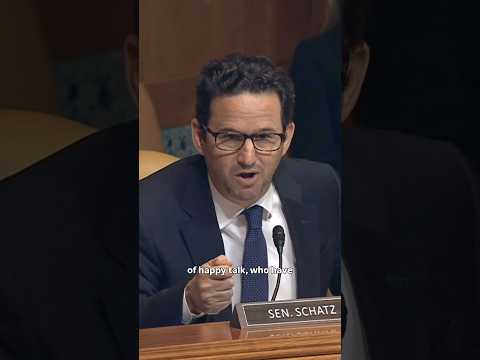
During a Senate hearing a senator asked why THAAD air-defense assets were being moved from South Korea and why personnel were evacuated after strikes on Gulf countries, calling the attacks "foreseeable." An agency official said the response was reviewed and "accounted for."
A senator pressed an agency official at a Senate hearing about the U.S. response after strikes on multiple Gulf countries, asking why Terminal High Altitude Area Defense (THAAD) assets were being moved from South Korea and why personnel were evacuated amid the crisis.
The senator said the attacks on Qatar, Saudi Arabia, the United Arab Emirates, Bahrain and Kuwait were not surprising and criticized the administration's public comments. "This was not just foreseeable, it was foreseen," the senator said, arguing that asymmetric retaliation and efforts to close strategic waterways were predictable and that officials should have anticipated them.
An agency official responded that the response had been examined closely. "Senator, I can reassure you that it was all accounted for," the official said, stating that "every aspect of this was poured over by the joint staff, by civilian leadership" and that actions were taken in pursuit of "a very clear goal." The official later reiterated, "Nobody expected that. We were shocked."
The exchange centered on three lines of questioning from the senator: why THAAD assets were moved from South Korea after hostilities began; why there was a scramble to evacuate personnel; and why the president publicly said he was "shocked" by Iran's retaliation when, the senator argued, the response was foreseeable. The official framed the administration's decisions as the result of review by military and civilian leaders and characterized the outcome as accounted-for actions rather than a failure of planning.
The transcript does not identify the official's agency or provide the senator's name; both speakers are recorded in the transcript only by functional labels. No formal motions, votes or further committee actions appear in the provided transcript.
The record ends with the official restating that leadership had been surprised; no formal decision or vote is recorded in the transcript.