Get Full Government Meeting Transcripts, Videos, & Alerts Forever!
Get email alerts on the Trees topic
No spam. Unsubscribe anytime.
La Porte commission flags tree‑removal backlog after expected federal funds fell through
Summary
Commissioners were told an anticipated federal grant for tree removal did not arrive; staff reported hundreds of high‑ and medium‑priority trees need removal and current cleanup is being covered by the street department pending funding or appropriations.
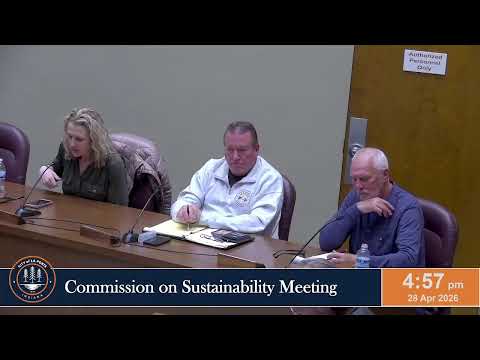
The La Porte Sustainability Commission discussed a growing backlog of storm‑damaged trees and a shortfall of removal funds after an expected federal grant did not materialize.
City staff reported the inventory includes roughly 350 high‑priority trees, 350 medium‑priority trees and about 175 low‑priority trees that require removal or attention; about 125 of the high‑priority trees also conflict with NIPSCO power lines, complicating removal timing and costs. Staff said the street department has been covering emergency cleanup and overtime, and that replacement planting funds are more readily available than funds to perform large tree removals.
Why it matters: Commissioners said homeowners and neighborhoods face safety risks when hazardous trees remain in place and that the city needs a funding path to accelerate removals. Staff said they are revising an RFP with Phil Graf to estimate contractor costs and exploring local appropriations and other funding routes while continuing emergency work.
Staff noted a recent Rotary donation that will fund 23 new trees (a mix of serviceberries, redbuds, dogwoods, hawthorns, magnolia and crabapples), with planting expected soon and a map of locations to be shared with the commission.
Homeowner options and process: Staff reiterated that homeowners may plant replacement trees in the public easement if they follow the city’s approved species list and permitting guidelines and that the city’s arborist and contracted vendor (Great Lakes Urban Forestry) are available to advise on placement and species selection.
Next steps: Staff will continue to refine cost estimates for large‑scale removals, coordinate with NIPSCO where power‑line conflicts exist and pursue potential council appropriations to cover emergency and backlog work. The commission asked staff to keep the issue on a near‑term agenda until funding is secured.