Get Full Government Meeting Transcripts, Videos, & Alerts Forever!
Get email alerts on the River Edge Redevelopment Zone topic
No spam. Unsubscribe anytime.
LaSalle council adopts River Edge redevelopment zone after public hearing
Summary
After a public hearing and staff presentations, the LaSalle City Council voted to designate a River Edge Redevelopment Zone covering riverfront and adjacent districts and approved related incentives and next steps pending state certification.
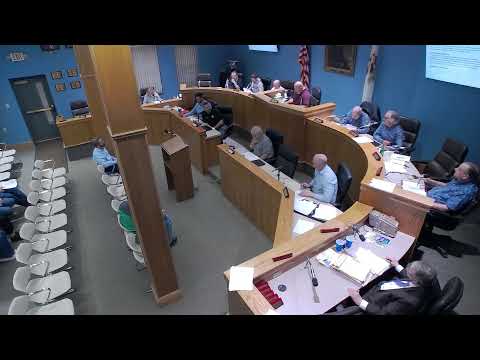
LaSalle’s City Council voted to adopt an ordinance creating a River Edge Redevelopment Zone after a public hearing during which city staff and consultant representatives described proposed boundaries, incentives and qualification rules.
Calvin Croy, a consultant who said he works with NCICG, told the council the hearing was properly noticed and outlined the zone shown on the meeting displays, which runs from portions of the Illinois River through the downtown district and out toward Interstate 80 and Route 6. Croy said designation would allow the city to offer incentives such as state and local income-tax incentives and state exemptions on building materials to encourage redevelopment and historic preservation.
"This public hearing has been properly noticed," Croy said, and the city is gathering input on proposed boundaries, local plans and incentives. Kirby, the city’s economic development director, said the zone generally follows existing TIF boundaries with modifications to capture nearby commercial areas and that boundaries or incentives can be amended later if the council elects.
Kevin, who identified himself with the North Central Council Governments, summarized the statutory qualification: a community must have qualifying acreage within 1,500 yards of a river (the presence of the Fox or Illinois rivers can expand eligibility) and the state allows a zone as large as 12.5 square miles. He said that having multiple rivers can increase the area the community may qualify to include.
Council members asked for clarification about the real-estate tax abatement provision. Staff said the city will not offer a real-estate tax abatement initially because the city already uses TIF incentives for some parcels, but the ordinance may be amended later if the council chooses to add that option.
After questions and public input, the council voted to adopt the ordinance designating the LaSalle River Edge Redevelopment Zone; the ordinance notes final boundaries are subject to certification by the Illinois Department of Commerce and Economic Opportunity and the city will submit materials to the state for review.
Votes at a glance - Ordinance designating the LaSalle River Edge Redevelopment Zone: adopted (motion and role call recorded). Next step: state certification by the Illinois Department of Commerce and Economic Opportunity. - Other items approved at the same meeting (summary): collective bargaining agreement with AFSCME; lease ordinances for small portions of municipal property (including 502 First Street and 126 Marquette Street); an ordinance authorizing a special-use permit for a permanent kitchen at 1050–1056 First Street (approved subject to conditions); amendments to city code regarding golf carts and vehicle sales; an ordinance amending water and sewer provisions and adopted wage ordinance for May 1, 2026–April 30, 2027.
Why it matters Designation as a River Edge Redevelopment Zone makes a range of state and local incentives available and can help cities attract investment, support historic preservation, and prioritize infrastructure or redevelopment projects along the riverfront. Adoption does not itself change taxes on specific parcels; certification and subsequent implementation steps will determine how incentives are applied.
What’s next City staff will submit the ordinance and supporting documentation to the Illinois Department of Commerce and Economic Opportunity for certification. Council members were told the city can amend boundaries or incentive offerings later, and that individual properties may be annexed or added to the zone through a separate process that can require applicant-paid review costs.