Get Full Government Meeting Transcripts, Videos, & Alerts Forever!
Get email alerts on the Land Use Rewrite topic
No spam. Unsubscribe anytime.
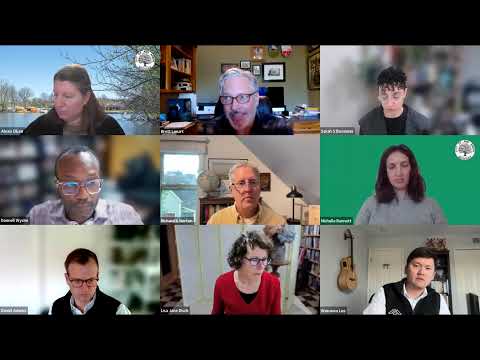
Planning Commission work session advances phased 'hub' work plan, debates sequencing, engagement and consultant support
Summary
At a April 28 Ann Arbor Planning Commission work session staff proposed a five-phase work plan to implement the comprehensive land-use plan (starting with the 'hub' category). Commissioners debated sequencing (hub vs. transition vs. residential), timing tied to a three-year implementation target, consultant support of about $300,000 per year and expanded public engagement including postcards; no votes were taken at the work session.
Staff presented a five-phase work plan on April 28 to implement the city’s comprehensive land-use plan, proposing Phase 1 focus on a new "hub" land-use category followed by transition, residential, use analysis and development-standards work.
Planner Alexis DeLeo told the commission that "phase one would be the hub land use category" and described the workflow as data collection and analysis, concept development, drafting text amendments and mapping, and then adoption. DeLeo said engagement would vary by step, with data phases to "inform" and concept and drafting phases designed to be more "consulting" and "involved."
Planning staff also said consulting funds may be available to help. "I think the administrator is proposing about $300,000 in consultant assistance to help with the implementation of the comp plan potentially two in two subsequent years, so for a total of $600,000 or 650, I think, but over a 2-year period," a planning manager told the commission, noting staff plans to start some work prior to July 1 if needed.
Commissioners pressed staff on sequencing, timelines and scope. Commissioner Adams said he will seek a motion at the next meeting to sequence the work "hub, transition, and then residential," arguing transition could "have more opportunity for housing units" and be less politically sensitive than low-density residential changes. Several other members, including Commissioners Lee, Norton and Bassiouni, voiced support for starting with hub and transition and keeping residential later in the sequence but stressed flexibility.
Timing and process drew repeated questions. Staff gave a rule-of-thumb estimate that producing a new zoning district from concept through adoption typically takes about a year, with public hearings and council consideration adding months. DeLeo and other staff warned that adding many parallel tasks or bringing all design standards into Phase 1 could jeopardize the commission's three-year implementation target.
Commissioner Norton pressed staff not to defer essential design rules too long, saying items such as parking, streets, landscaping and stormwater "go hand in hand" with hub drafting and should receive early attention where they materially affect outcomes. Staff responded that some standards are applied citywide by ordinance and that addressing every standard for each district at once could slow the process.
Engagement was a central theme. Commissioner Adams proposed a baseline postcard to every household with a QR code and sign-up link to ensure broad notification; staff said the packet contains an engagement budget estimate (staff noted an approximate postcard cost in the packet). Multiple commissioners and public commenters urged expanding outreach beyond routine meeting formats to reach groups that do not typically attend planning meetings.
Staff also previewed an internal proposal to limit the initiation of future UDC text amendments by outside petitioners, saying the change would preserve the commission’s work plan by restricting initiation to the commission, council or staff (existing, already-filed applications would be exempt). Commissioners asked for more detail before any formal recommendation.
Public commenters reiterated concerns about engagement and impacts on historic districts. Timothy Rhodes said there is "a huge engagement deficit" in historic neighborhoods and urged early attention to stormwater and to clarifying how hub boundaries will interact with adjacent residential areas. Other commenters urged simplification of district structure, creative outreach to underrepresented populations, and moving early to draft zoning language so the public can react to concrete proposals.
The work session was informational only; staff will bring a proposed work plan back for formal consideration at a regular meeting where the commission may adopt a resolution setting the sequence, engagement steps and timing. No formal votes or ordinance amendments were taken at the April 28 work session.