Get Full Government Meeting Transcripts, Videos, & Alerts Forever!
Get email alerts on the Sipp Modernization topic
No spam. Unsubscribe anytime.
Census Bureau outlines plan to modernize SIPP: shorter reference period, internet self‑response and greater use of administrative data
Summary
Census presenters said modernized SIPP will use a shorter six‑month reference period, smaller samples, modular content and administrative records to speed products and reduce respondent burden; testing begins with a 2026 internet self‑response pilot, contingent on budget and OMB approval.
Neil Bennett, SIPP modernization lead at the U.S. Census Bureau, opened a webinar describing a multi-year plan to speed and simplify the Survey of Income and Program Participation (SIPP) while retaining the survey’s core mission of tracking income and program participation over time. "SIPP's mission is to provide nationally representative data on sub-annual dynamics related to income, program participation, household composition, and the interactions between each of these items," Bennett said during the briefing.
Sharon Stern, Assistant Division Chief for Employment Characteristics, said the modernization will prioritize timelier products and lower respondent burden. Stern said the household survey in the future design would likely run with a smaller sample, a six-month reference period (down from a one-year window), shorter questionnaires and modular content that can be turned on or off. "The future SIPP aims to be more nimble and to produce even more timely estimates," she said, while noting the program will continue to meet statutory obligations to produce data on people receiving government assistance.
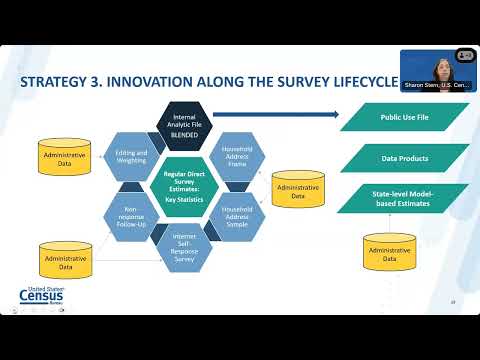
Stern outlined a phased testing timeline, stressing all stages are conditional on budget and Office of Management and Budget (OMB) approval: a small nationally representative internet-only test planned for 2026, adding nonresponse follow-up in 2027, and a full-scale test in 2028 to validate methods ahead of broader deployment. The bureau also plans to build an enhanced address/demographic frame to target households more likely to be receiving assistance and to experiment with synthetic data and state-level model-based estimates to expand small-area utility.
On administrative data, Stern described research into using tax and other records—and linking them via personally identifiable keys (PIKs)—to reduce on‑survey questions and create blended estimates for some variables. She cautioned that admin-based products will be lagged compared with the quickest direct estimates from the household survey. In response to a participant question about the time lag in tax records, Stern said some direct estimates can be released quickly while admin‑informed blended products will take longer and that the program is working to balance those tradeoffs.
Stern emphasized ongoing stakeholder engagement—three to four webinars per year, conference presentations and a program mailbox and GovDelivery announcements—so users can comment on indicator choices, product timing and methods. She said internal indicator and estimation working groups are exploring potential summary measures such as a labor-market tightness indicator and investigating periodicity and approaches to characterize dynamics.
The Census Bureau stressed that modernization choices are research-driven and not final. Stern said cognitive testing began in 2023 and that May 2025 labor-force tests informed the team's thinking about questions such as gig work and measurement of job dynamics.
What happens next: the Census Bureau plans further testing and outreach, with product timing and scale dependent on funding and subsequent approvals.