Get Full Government Meeting Transcripts, Videos, & Alerts Forever!
Get email alerts on the Land Use topic
No spam. Unsubscribe anytime.
Titusville council adopts ordinance setting rules for certified recovery residences
Summary
The City Council adopted Ordinance 9-2026 to implement state requirements for certified recovery residences, including application procedures, inspections, distance limits between residences, and revocation and appeal provisions; council accepted the ordinance as advertised with no added conditions.
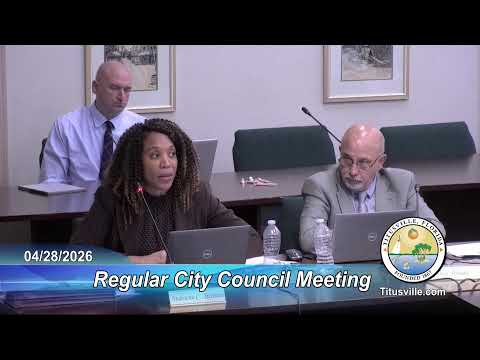
The Titusville City Council on April 28 adopted Ordinance 9-2026 establishing local procedures for review, approval and oversight of certified recovery residences under state law.
City Attorney Brad Parish told the council the ordinance implements the state requirement to create a review process and reasonable-accommodation pathway, and adds local provisions for inspections, graduated distance requirements, and revocation criteria. Parish said the draft includes a 1,200-foot distance provision intended to avoid concentration of residences in single-family neighborhoods: “a certified recovery residence shall not be located within a radius of 1,200 ft of another existing certified recovery residence,” he said.
Planning and Zoning recommended a number of changes to the draft, including fees, graduated distancing tied to occupancy, and clarifications of the appeal path. Staff advised the council that some recommended changes would be substantive and require re-advertising; staff proposed keeping the advertised language for final adoption and returning later if the council wants additional edits. Council member Stokel pressed staff about whether occupancy limits and life-safety requirements (for example, fire suppression for higher occupancies) could be included in permit documentation; staff said occupancy remains limited by building code and life-safety inspections.
Member Nelson moved to adopt the ordinance as published; Vice Mayor Cole seconded. The council voted unanimously to approve Ordinance 9-2026 as presented. The ordinance provides an application and appeal process (through a special magistrate), conditions for revocation for cause, and guidance for reasonable-accommodation requests required under the new state law.
The ordinance takes effect as provided in the code; staff said implementation will require an internal application form and procedures to confirm certification levels and compliance. Council members and a public commenter urged monitoring for unintended impacts in neighborhoods and emphasized coordination with building, fire and health authorities.