Get Full Government Meeting Transcripts, Videos, & Alerts Forever!
Get email alerts on the Gold Star License Plate topic
No spam. Unsubscribe anytime.
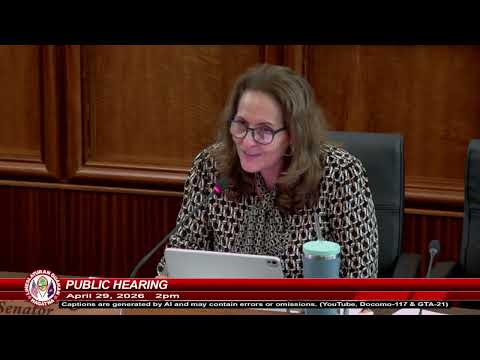
Guam lawmakers hear testimony to let children receive Gold Star license plates
Summary
Family members and veterans urged the Guam Legislature to amend Title 16 to permit children of fallen service members to receive Gold Star license plates; veterans affairs director and Department of Revenue and Taxation offered support and described verification steps; committee heard the bill but took no formal vote on April 29, 2026.
A Guam legislative committee heard emotional testimony on April 29 from Gold Star families urging lawmakers to amend local law so children of fallen service members can receive special Gold Star license plates.
Sponsor Senator Borha said Bill 260‑38 narrowly amends subsection 7120.3b of Chapter 7, Title 16, to add “children” to the list of family members eligible for the plate. “That gap is what this bill closes,” Borha said, telling the committee that the proposal carries no meaningful fiscal impact and is intended as a tangible symbol of remembrance for children who grew up without a parent.
Several family members described how the current eligibility framework leaves their children or siblings unable to continue carrying the plate after the parents pass. Dorothy Lella, who identified herself as a Gold Star mother, recounted losing her son in 2010 and said the plate recognizes children’s ongoing loss: “We are the families left behind to be their voice,” she told the committee.
Veterans and agency officials described the administrative process for issuing Gold Star documentation. Jose(en) Augustine, director of the Guam Office of Veterans Affairs, said federal documentation (for example casualty reports and DD forms) and a certified letter from the federal agency are used to verify eligibility, and he expressed agency support for the bill. The Department of Revenue and Taxation submitted written testimony that it could not provide a precise count of eligible children but expected only a minimal fiscal impact.
Witnesses and staff noted practical questions that a final law should address, including how to verify sibling relationships when surnames differ and how to process multiple eligible children in one family. Director Augustine and witnesses described typical evidence—death certificates, DD Form 1300, birth certificates for children—and said the agencies could work out verification policy during bill markup.
The committee closed the hearing after sponsors and supporters spoke; no vote on the bill was recorded during the public hearing. Senators indicated they will hold markup to address implementation details and may consider expanding eligibility to siblings as part of that process.