Get Full Government Meeting Transcripts, Videos, & Alerts Forever!
Get email alerts on the Police Budget topic
No spam. Unsubscribe anytime.
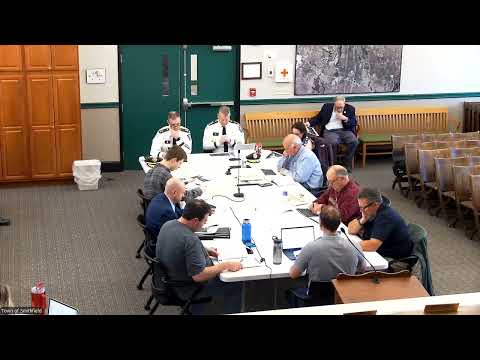
Chief outlines staffing shortfalls, new CAD pilot and tech needs in police budget presentation
Summary
The police chief told the City Budget and Financial Review Board that the department is authorized for 48 sworn officers but a staffing benchmark suggests the town would need about 53 officers; the chief also described a new CAD system pilot, requests for traffic enforcement resources and capital IT upgrades. Board members probed vehicle purchases, overtime and mental‑health response.
The police chief told the City Budget and Financial Review Board on April 28 that the department is authorized for 48 sworn officers and 12 civilian employees and that, using a commonly cited benchmark of 2.4 officers per 1,000 residents, the town’s population of about 22,118 would equate to roughly 53 officers.
The chief outlined the department’s mission and structure and said the FY request focuses on maintaining service levels, reducing overtime and investing in technology. “We pledge dedication and diligence in protecting life, liberty, and property, preserving peace, and enforcing laws,” the chief said, describing patrol, detective and administrative roles and specialty positions including school resource officers and traffic assignments.
Why it matters: Board members pressed the department on how incremental staffing, overtime and capital requests interact. The chief said that adding officers to squads reduces overtime and provides more consistent supervision across shifts, and that the department aims to fill its authorized 48 positions while assessing future growth needs.
The presentation highlighted three items the department asked the board to consider. First, staffing and scheduling: the chief described three daily shifts with a contractual minimum of four officers on the road and one supervisor; he said vacancies and supervisor gaps on certain shifts require careful squad stacking to avoid overtime. Second, a new computer‑aided dispatch (CAD) system: the department is participating in a statewide pilot (provided free for the first year) that links GPS‑mapped incidents and enables interagency data sharing. The chief said the new CAD will better categorize call types and provide clearer measures of time spent on incidents such as domestic violence, mental‑health calls and felony investigations. Third, traffic enforcement and analytics: the department described rotating monthly beats (B1–B3) and discussed third‑party traffic data and short‑term camera/radar rentals that capture a portion of vehicles on a road; staff recommended developing a business case that ties officer‑hour savings to technology costs before committing to multi‑year contracts.
Board members questioned capital and operating details. The chief said the new CAD will cost roughly $50,000 per year after the pilot in a five‑year contract; the department historically spends about $30,000 a year on computers and had proposed a one‑time increase to about $60,000 for upgrades and mobile workstations. On vehicles, the chief clarified that no new cruisers are included in the FY27 budget and that some fleet replacements are funded via grants or multi‑year purchase schedules; vehicles are typically retired after roughly 100,000 miles. The board also asked about a requested overtime budget increase (discussed at approximately $156,000) and whether hiring additional officers would produce a proportional reduction in overtime costs; department leaders said the answer depends on when and where additional staffing is deployed.
Several members raised the time demands of mental‑health calls and the limits of social services at night. The chief said those incidents can tie up officers for hours and that the budget includes a daytime full‑time social‑service/advocate position intended to help with followups and referrals; he noted such services have limits during late‑night hours.
The board also discussed facilities and administrative consolidation. Staff and the board agreed rising contractor costs make it worth considering in‑house facility maintenance and consolidating some payroll and fiscal functions across departments to reduce outsourcing expenses.
What’s next: The board heard public comment after the presentation and agreed to follow up on procedural questions with the town solicitor. The department did not receive a final vote on its budget at the meeting; board members said they will continue to review line‑item details and capital justifications as the FY process proceeds.