Get Full Government Meeting Transcripts, Videos, & Alerts Forever!
Get email alerts on the Criminal Indictment topic
No spam. Unsubscribe anytime.
Grand jury indicts James Comey on two counts alleging threats against the president
Summary
A grand jury in the Eastern District of North Carolina returned a two-count indictment charging James Comey with threatening the President and transmitting an interstate communication containing a threat; DOJ and the FBI said the matter was the result of an 9–11 month investigation and declined to discuss evidence.
Attorney General Blanch announced that a grand jury in the Eastern District of North Carolina returned a two-count indictment charging James Comey with making a threat to take the life of and inflict bodily harm on the President and with transmitting in interstate commerce a communication containing a threat to kill the President.
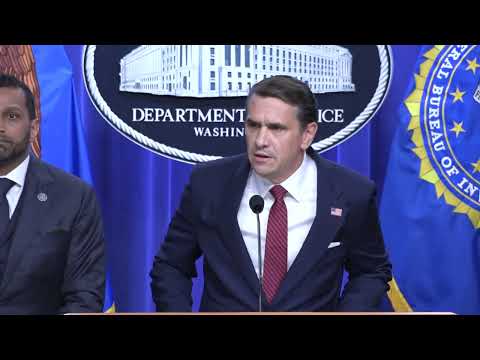
United States Attorney Ellis Bole said the grand jury returned a "true bill," charging Comey with violations of 18 U.S.C. 871A and 18 U.S.C. 875(c). "Mr. Comey will be given every form of due process all citizens are entitled to receive, to include a trial by a jury of his peers," Bole said, adding that "in the Eastern District of North Carolina, it doesn't matter who you are."
FBI Director Patel described the investigation as a methodical, career-led inquiry that took roughly nine to 11 months and said agents and prosecutors presented evidence to a grand jury that returned the two-count indictment. Director Patel noted that "shortly after posting that threat, he deleted that threat and then issued an apology," and reiterated that the defendant will have his day in court.
Reporters asked whether the grand jury-issued arrest warrant reflected a DOJ request and whether Comey posed an ongoing public threat; DOJ responded that grand juries issue arrest warrants, that prosecutors will coordinate with defense counsel, and that arraignment scheduling depends on case-specific factors. When asked how intent would be proved given the defendant's apology and characterization of the post as political speech, officials said intent is established through witnesses, documents and, where appropriate, the defendant's own statements, but declined to discuss the evidence while the case is pending.
Officials repeatedly emphasized that threats against the President are prosecuted regardless of the defendant's status. The filing carries potential prison terms; the two statutes cited each carry maximum penalties provided under federal law. The briefing closed after additional questions about unrelated investigations and pending forensic analyses of an unrelated shooting, which DOJ said remain in progress.
The indictment and any subsequent criminal proceedings will be handled by the United States Attorney's Office for the Eastern District of North Carolina. No arraignment date or detention request was announced during the briefing.