Get Full Government Meeting Transcripts, Videos, & Alerts Forever!
Get email alerts on the Education Funding topic
No spam. Unsubscribe anytime.
Title I update: Wake County estimates ~$32M for 2026‑27 and highlights school uses and supports
Summary
District Title I staff said Wake County expects a little over $32 million for Title I in 2026‑27, serving 62 schools; presenters outlined allotment formulas, that roughly 70% of funds support school services, and examples of how principals use allocations to buy teacher months and coaching.
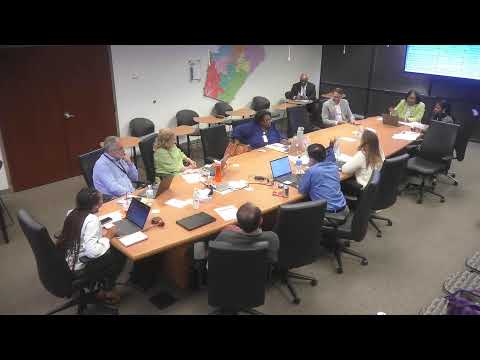
The Student Achievement Committee received an update on Title I funding and program operations, including an estimated funding level for 2026‑27, how allotments are used at schools, and school‑level examples of the program's impact.
Dr. Burton, presenting for the Title I office, said Wake County is estimating "a little over $32 million" for the 2026‑27 Title I grant and that the district expects flat funding relative to the current year. She described the district's schoolwide model and said more than 70% of Title I funding supports school services, nearly half of the budget is directed to schools, about 30% funds pre‑kindergarten supports, roughly 11% supports central services staff and roughly 6% covers administrative costs.
Dr. Burton outlined eligibility and allotment rules: since 2024‑25 the district uses direct certification (data from state agencies) instead of household meal applications to determine eligibility; elementary and middle schools must meet at least 40% poverty to qualify for schoolwide Title I, while high schools must meet a 75% threshold. She said the district currently serves 58 Title I schools and plans to serve 62 next year; two schools (Brooks Elementary and Poe Elementary) will exit Title I because their poverty percentages no longer meet thresholds.
District leaders explained how principals use allotments. Dr. Burton said the district funds about 1,336.5 teacher months across the 58 schools currently served and principals decide how to allocate per‑school allotments. Principal Rhonda Curtis of Vandor Springs Elementary said her school prioritizes buying teacher months to reduce class size and create small‑group instruction; "there is no replacement for a good, caring, loving teacher," she said, describing three to four additional classroom teachers funded by Title I in her building. Aaron Marson of East Milbrook Middle said his school hired five additional staff and emphasized that "student learning outcomes don't happen by programs. They are influenced by people," describing coaching, standards‑driven instruction and targeted professional development.
Board members asked detailed operational questions: how principals request budget changes (monthly transfer windows are available and initial budget meetings were being completed), how the district handles contracted tutoring changes (principals may use Title I or restart funds to continue programs at some scale), and whether district practice balances frequent central support in partner priority schools with teacher morale and local ownership. Dr. Burton said partner priority schools receive more frequent weekly support from central staff to build capacity.
Next steps and follow‑up: Dr. Burton offered to return with more detail on parent liaison roles, the training those positions receive, and additional implementation clarifications; principals are completing school budget meetings and can submit monthly fund transfer requests during the year.