Get Full Government Meeting Transcripts, Videos, & Alerts Forever!
Get email alerts on the Zoning Recodification topic
No spam. Unsubscribe anytime.
Falmouth Planning Board begins prioritizing sweeping zoning amendment list, flags tiny-house and undersized-lot issues
Summary
The Planning Board reviewed a comprehensive master list of proposed zoning amendments, including tiny-house and undersized-lot provisions, agreed to prioritize items for a likely October/November town meeting, and invited public and board comments ahead of a May 12 presentation by the Cape Cod Commission on draft mixed residential–commercial design guidelines.
The Town of Falmouth Planning Board on April 28 opened a sustained review of a comprehensive master list of potential zoning amendments taken from the second phase of municipal recodification. Chair John Druley urged board members to review the packet, submit written comments to staff and return prepared for deeper discussion at future meetings.
Board members said the list is extensive and not suitable to be handled in a single meeting. Members asked staff to provide explanatory language for each item so the board can better understand the rationale and possible consequences before drafting bylaw text or taking articles to town meeting. One member warned that presenting too many zoning changes simultaneously risks overwhelming town meeting voters; the board agreed to prioritize a smaller set of articles for a fall town meeting (now expected in October/November) and to stage larger items over time.
The packet includes several higher-effort items—such as tiny-house regulations and undersized-lot treatments—that members flagged for careful definition. Discussion emphasized that definitions matter: without precise definitions, bylaws risk creating confusion or unintended outcomes. Staff said it is preparing a spreadsheet and an initial GIS-based inventory of lots near the minimum size threshold (e.g., lots about 4,800–5,000 square feet) and will note additional constraints such as wetlands, septic suitability and habitat protections that affect whether a lot is truly buildable.
Board members and staff discussed potential policy tools to make undersized lots buildable, including transfers of development rights, and agreed the town needs detailed technical analysis before selecting a recommended approach. Staff indicated consultant attendance will not be available for the next meeting, so the board asked that explanatory notes accompany each packet item and that members send written priorities to staff at least a week before the next meeting so staff can prepare.
The board also discussed timing: members suggested packaging simple, clerical edits into a single article when appropriate while reserving three to five substantive zoning articles for a single town meeting warrant to avoid overloading voters. The board emphasized the need for public hearings and outreach on complex items.
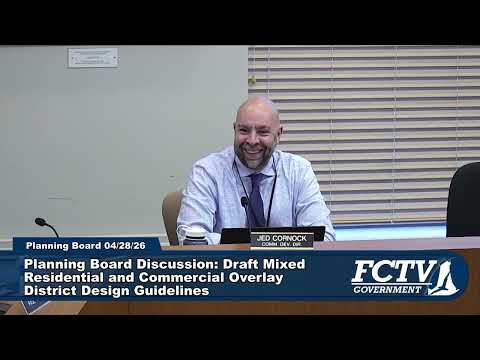
The Cape Cod Commission will appear at the board’s May 12 meeting to present draft design guidelines for a proposed mixed residential and commercial overlay district; staff asked the board to review the draft and submit comments by email so the commission can address questions at that meeting. The draft guidelines cover items such as lighting, landscaping and building facades and are expected to interact with local historic‑district considerations downtown.
Next steps: staff will return with explanatory language and a spreadsheet of lots that may be affected by tiny-house and undersized-lot proposals; board members will prioritize items in writing so the board can prepare for targeted discussion at the next meetings and for town meeting scheduling in the fall.