Get Full Government Meeting Transcripts, Videos, & Alerts Forever!
Get email alerts on the School Budget Cuts topic
No spam. Unsubscribe anytime.
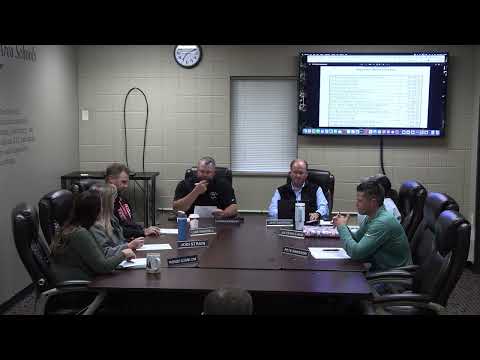
Cannon Falls Area Schools board approves preliminary FY27 cuts list and adds four‑day week as study option
Summary
The Cannon Falls Area Schools board adopted a finance‑committee recommended list of potential FY27 reductions and approved adding a $250,000 placeholder tied to studying a four‑day school week; the board will refine the list to a $700,000 target in January/February.
The Cannon Falls Area Schools board approved a preliminary list of possible reductions intended to produce $700,000 in savings for fiscal year 2027 and added a placeholder $250,000 estimate tied to studying a potential four‑day school week.
Administration presented a line‑item list of proposed measures that included cutting 1.0 elementary teacher FTE, reducing first‑ and second‑grade sections (from four sections to three in some grades), restructuring secretarial positions, eliminating a planned secondary access (ADIS/ADS) hire, trimming supply budgets, increasing activity fees (to as much as $200 and removing a family cap), charging seniors the student admission rate, charging for livestreaming events, raising Community Center (CCC) rental rates (including a $1,000 monthly senior center increase), and limiting some nonconference travel for junior high athletics to roughly 30 miles to reduce transportation costs. Administrators said the list was prepared early so voters would see the reductions ahead of absentee balloting, which begins Sept. 19.
Board members questioned specific figures and operational impacts. Mr. Strauss, answering class‑size questions, said projected first‑ and second‑grade class sizes under the proposed cuts would be above district guidelines — "They would actually both be over," he said, citing estimates such as first‑grade sections of 24–25 students and second‑grade classes up to 26. Board members also pressed staff for detail on the transportation estimate (presenters framed the $29,000–$30,000 savings as the effect of removing one in‑town route) and flagged safety concerns for routes along Highway 19.
The finance committee told the board it had discussed a four‑day school week as a potential option to close the remaining gap; committee members proposed a conservative planning estimate of $250,000 in annual savings but repeatedly said the idea needs further study, community engagement and operational planning. Board discussion referenced other Minnesota districts that have tried the model, noted that some districts report flat test scores after switching and high community satisfaction rates, and raised concerns about child care, contract language, impacts to curriculum time and equity for families.
Members debated using one‑time options such as selling or repurposing the CCC to shore up finances (administration cited rough sale estimates between about $150,000 and $200,000 but warned of losing ongoing rental revenue and usable space). The board also discussed the district’s long‑term facilities maintenance (LTFM) picture; members warned that reducing annual facility funding could create larger obligations later.
After extended questions and comment, a motion to accept the finance committee’s recommendations and to include a four‑day week placeholder (producing roughly $950,000 in possible reductions on paper that the board will pare to $700,000 in January or February) passed with one member opposed. The board instructed administration to continue researching four‑day‑week implications, gather community input, and return with firmer numbers before the final cuts are set.
Next steps: the board will revisit and narrow the list in January/February—when enrollment counts and other data will be clearer—and the administration will prepare the materials to communicate the proposals to the public ahead of the levy/ballot timeline.