Get Full Government Meeting Transcripts, Videos, & Alerts Forever!
Get email alerts on the Budget topic
No spam. Unsubscribe anytime.
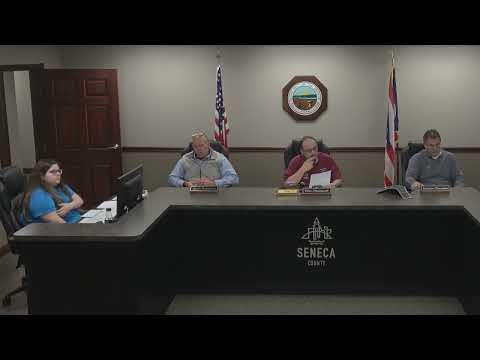
Seneca County approves supplemental appropriations to cover EMA salary lines and 911-related funds
Summary
Seneca County commissioners approved supplemental appropriations and interfund adjustments to cover shortfalls in emergency management salary lines, wireless 911 salaries, equipment and contract services; the county administrator said grants will cover much of upcoming training costs.
The Seneca County Board of Commissioners approved a package of supplemental appropriations April 28 to address negative balances and payroll allocations in emergency-management funds.
The county administrator (speaker identified in the transcript by role) presented the measures: $13,000 into the Emergency Planning Commission salary line, $40,000 into the wireless 911 salary line, and three reverse suballocations returning $30,000 (salaries), $15,000 (equipment) and $3,000 (contract services) to the revenue side of various EMA funds to correct deficits. The administrator told commissioners the changes reallocate portions of his salary and a technician—s salary across multiple funds to reflect actual work performed: "what I did was I just allocated across the board, thus reducing the EMAs deficit issue," the administrator said.
A motion to approve the supplemental appropriations was made and seconded; a roll-call vote followed and the board recorded affirmative votes from the commissioners.
Separately, the county—s emergency management staff outlined a schedule of upcoming trainings supported largely by grant funding: a livestock ("bovine") emergency response training May 2, a 911 vendor presentation May 14, a next-generation 911 addressing workshop May 20, technician and safety-officer trainings in May and June, and an EOC exercise May 30. The administrator said federal/state grants (hazardous materials emergency preparedness grant and PUCO funding) will cover roughly 80% of training costs, leaving the county—s share around $30,000.
Next steps: staff will implement the approved interfund moves and continue scheduling training; the board asked the county administrator to finalize paperwork and monitor grant reimbursements.