Get Full Government Meeting Transcripts, Videos, & Alerts Forever!
Get email alerts on the Airport Infrastructure topic
No spam. Unsubscribe anytime.
Rangeley commission forwards August fly‑in, advances AIP‑funded taxiway and hangar planning
Summary
The Rangeley Airport Commission voted to forward a proposed August 22 fly‑in to the board of selectmen and reviewed AIP‑funded projects including a crack‑seal start by late May, apron rehabilitation design, tie‑down replacements and pen‑and‑ink ALP changes to enable taxi‑lane and hangar layouts; commissioners agreed to a builder workshop before final layout approval.
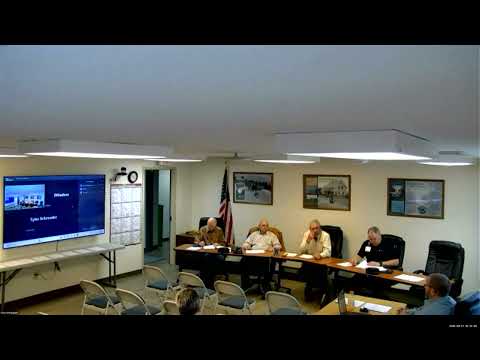
The Rangeley Airport Commission on Tuesday moved to forward a proposed August 22 fly‑in to the board of selectmen and spent much of its meeting advancing planning for AIP‑funded airfield work and hangar development.
Joe, the airport manager, told the commission he met earlier with staff about a client event scheduled for Aug. 22 and asked the commission to “approve the concept pending board of selectmen approval and any vendors permits.” A motion to forward the proposal to the board of selectmen was moved and seconded; the commission voted unanimously to advance the request at the local‑government level.
The meeting also focused on multiple Airport Improvement Program projects. Dave, a state representative working with the airport, said a crack‑seal contract with Proceal is a quick, roughly two‑week job that will likely require the runway to close for a couple of days; he said he expected work to start by the end of May. Dave said the apron reconstruction design is being finalized and draft construction documents should be ready for review toward the end of May so the project can be bid.
Commissioners debated how to use limited AIP funds most efficiently as they plan taxi‑lane geometry and hangar types. Members weighed the tradeoffs between T‑hangars and larger box hangars, noting that T‑hangars require taxi lanes on both sides and thus raise taxiway development costs. Dave recommended including a primary taxi‑lane layout and a secondary alternate (ABI) in design documents in case full funding does not materialize, and cautioned against locking the airport into a layout that would block future development options.
On construction details, participants discussed building estimates and foundations. Commissioners and participants cited rough building costs in the low hundreds of dollars per square foot and favored deeper perimeter footings rather than only a thick slab to reduce frost‑related cracking in the local climate.
The commission also raised several maintenance items. Members asked whether existing tie‑down anchors that have been pushed out by frost will be repaired under the upcoming work; Dave said existing anchors will be replaced with deeper anchors that include concrete collars to address frost issues and suggested coordinating private contractors with the scheduled Proceal visit to get local pricing for any work on private apron sections.
Rather than deciding final layout changes at the meeting, commissioners agreed to meet in a workshop with the potential builder to get the builder’s input and to optimize use of AIP dollars. A tentative workshop date discussed during the meeting was May 18 at 2 p.m., with the commission agreeing to post notice once the time is confirmed.
What happens next: the commission advanced the fly‑in proposal to the board of selectmen for approval and directed staff to circulate draft apron design documents and schedule the crack‑seal work; the airport manager and state representatives will pursue ALP pen‑and‑ink approval with FAA and DOT and set a builder workshop to firm up layout decisions.