Get Full Government Meeting Transcripts, Videos, & Alerts Forever!
Get email alerts on the Budget topic
No spam. Unsubscribe anytime.
Ogden mayor unveils FY2026-27 budget; council accepts proposal for review
Summary
Mayor presented a balanced FY2026-27 proposal that he says avoids a tax increase while prioritizing public safety, infrastructure and performance-based employee pay; council voted unanimously to accept the proposal for staff and committee review.
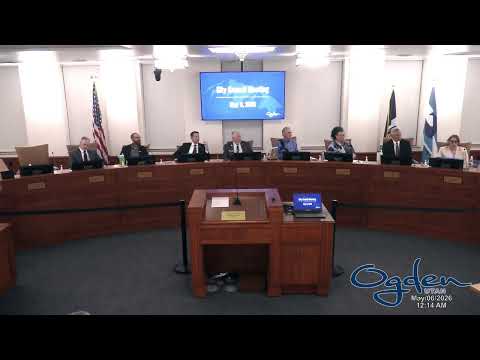
Mayor presented the proposed Ogden City FY2026-27 budget at the May 5 council meeting and asked council to accept the plan for formal review. The mayor framed the proposal as a two-part pitch: maintain core public safety and infrastructure investments while avoiding a tax increase.
Key figures the mayor cited include a general fund of just under $100 million and a total city budget of about $328 million; he said the proposal would invest roughly $11 million in utility infrastructure (water, storm, sewer and river improvements), $6.1 million toward Union Station (about $2.5 million city match with $3.6 million federal funding sought), and roughly $1.2 million for park improvements. The administration expects a modest sales-tax revenue increase, roughly $1.7 million in interest earnings, and nearly $1 million in additional Prop 1/BNC funding that year. The mayor told the council he proposed cost-of-living adjustments (2.18% targeted) and a performance-based pay approach for employees.
Council voted without opposition to accept the mayor's proposal for review and to begin detailed budget work sessions; Council Member Richie moved to accept the budget for review, seconded by Council Member Myers, and the motion passed on a unanimous voice vote. Staff indicated more detailed budget work sessions would be held over the coming weeks leading into the June close of the review process.
The mayor emphasized the administration's intent to rely on grants and efficiencies to limit tax pressure, and council members asked to examine details in committee sessions on revenue assumptions, capital projects and public-safety staffing levels.