Get Full Government Meeting Transcripts, Videos, & Alerts Forever!
Get email alerts on the Public Safety Body Cameras topic
No spam. Unsubscribe anytime.
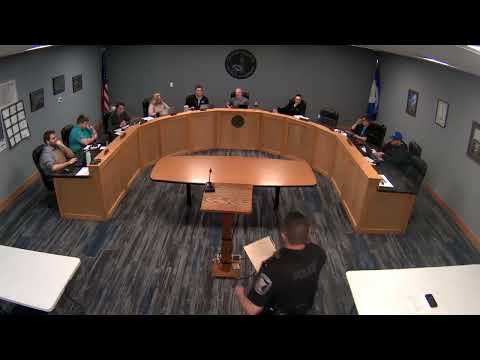
Kasson City council approves body-worn camera policy, plans to fund equipment in next year's budget
Summary
After a public hearing, the Kasson City Council approved a body-worn camera policy that staff said follows state-required language on access and redaction. Council discussed vendor integration, activation rules, retention schedules and a projected $21,133 annual contract cost; the purchase will be considered in next year’s budget.
The Kasson City Council approved a new body-worn camera policy after a public hearing and staff presentation, and directed staff to include the equipment and data-storage costs in next year’s budget.
Staff told the council the draft policy includes the state-mandated confidentiality and release provisions, identifies who may access footage and requires redaction of protected individuals (for example, undercover officers and mandated reporters) before public release. Staff described activation methods for the system the city plans to buy—activation by in-car systems, Bluetooth-enabled holsters or manual start—and said the vendor preference is Axon to align in-car and body systems.
Council discussion focused on when recordings are required (generally for dispatched calls and other law-enforcement activities, with routine office or purely personal conversations exempt), who may request footage (data subjects whose image or voice appears, with proof of identity), and how long different classes of footage are retained. Staff said routine general-contact recordings are retained for 90 days if they have no evidentiary value; use-of-force incidents and other evidentiary material are retained indefinitely.
Staff provided an estimated annual cost for the combined body and in-car camera service and data storage of about $21,133 under a proposed five-year contract. The proposal would include initial hardware purchases and scheduled refreshes (staff described refreshes in year one and later refresh points during the contract). Hardware lead times were estimated at three to four months; payments would be built into next year’s budget and a separate expenditure approval could follow.
Councilors asked about data-management workload and legal requests; staff acknowledged additional administrative steps for labeling and cataloging footage but said current procedures for incident documentation are similar. The council also noted support from officers and the local union for the system.
A motion to approve the body-worn camera policy as presented passed on a voice vote with one member recorded as opposed. The policy adoption was limited to the policy language; the hardware purchase will be considered as part of the next budget cycle and any contract or expenditure would be approved separately.
What happens next: staff will proceed with procurement planning and integrate the camera purchase into the upcoming budget materials. Hardware delivery and system integration were expected to take several months after contract approval.