Get Full Government Meeting Transcripts, Videos, & Alerts Forever!
Get email alerts on the Land Use topic
No spam. Unsubscribe anytime.
Olmsted County commissioners deny Adler Meadows land‑use amendment after split testimony on sewer costs and timing
Summary
The Olmsted County Board voted to deny a land‑use plan amendment requested by Adler Meadows LLC to reclassify about 140 acres from the city's urban service area to suburban development after hearings on technical feasibility, sewer extension costs and housing market impacts.
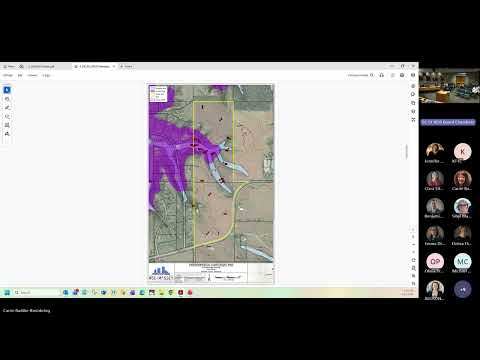
The Olmsted County Board of Commissioners on April 17 denied a land‑use plan amendment from Adler Meadows LLC that sought to remove roughly 140 acres from Rochester’s urban service area and reclassify it for suburban large‑lot development.
Allison Sosa, a county planner, told commissioners the county planning department’s recommendation remains to deny the amendment, citing multiple general‑land‑use plan findings and concerns that removal from the urban service area could increase costs for neighboring properties and set an undesirable precedent. “Our recommendation remains denial,” Sosa said during the county presentation. The county planning commission, by contrast, had recommended approval and Hill Township submitted a resolution supporting the amendment.
Developer representatives led by Bill Twitton of WC Engineering argued the parcel is physically constrained and economically unsuited to interim (city‑served) development. Twitton cited his firm’s soil borings, wetlands, steep slopes and an estimated 10,000 cubic yards of rock removal required to bring gravity sewer into the site. He presented contractor bids showing an estimated $7.8 million cost for an interim, sewered community alternative versus about $3.9 million to build a suburban large‑lot subdivision with individual septic and shared wells, and said the interim option would leave little or no profit for typical lot development.
Rochester city staff urged retaining the land in the urban service area, noting the city’s growth‑management map and recent investments in a trunk sewer line they estimate at about $2 million. City project manager Matt Crawford said routes exist to extend sewer to the area but cautioned that extensions typically take several years and work best when multiple downstream owners join in a coordinated petition and assessment.
During public comment, realtors and several nearby residents warned of market mismatch and neighborhood impacts. Realtors said deferred assessments and community sewer systems could make lots harder to sell and impose long‑term maintenance obligations on buyers. Neighbors in Hidden Hills said they bought rural lots deliberately and opposed runs of sewer through private roads or forced connections.
Commissioners debated competing priorities — orderly long‑term growth planning favored by the city versus the developer’s engineering evidence of high up‑front costs and the township’s support for suburban standards. After discussion, the board voted to deny the land‑use plan amendment and adopt the staff findings supporting denial. The board’s action keeps the property within the urban service area and preserves the existing GLUP designation for now.
What happens next: the denial preserves the city’s ability to manage long‑term growth under its urban service map; developers may pursue other options, and any future petition for interim development would require additional technical and financial demonstration to staff and the board.