Get Full Government Meeting Transcripts, Videos, & Alerts Forever!
Get email alerts on the Student Wellbeing topic
No spam. Unsubscribe anytime.
Taos district outlines expanded SEL, restorative justice and community schools programs
Summary
District leaders presented plans to expand social-emotional learning, restorative justice across grades, a state-supported Behavioral Health Initiative, and community schools partnerships that have already yielded in-kind donations and expanded after-school meals and tutoring.
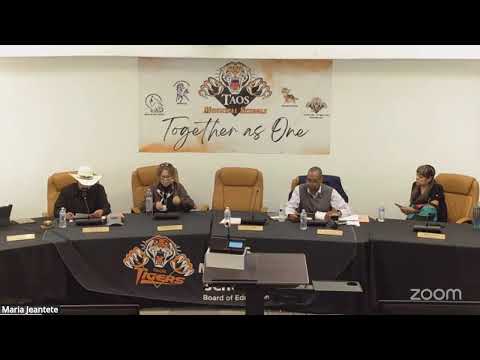
Taos Municipal Schools staff told the board on April 22 that the district is expanding social-emotional learning (SEL), restorative practices and a state-supported Behavioral Health Initiative to strengthen student well-being.
Associate Superintendent Renea Montreon and staff described multiple components: schoolwide SEL as a preventive measure; restorative justice implemented in tiers across elementary, middle and high schools; the district's selection as one of six New Mexico Public Education Department (PED) pilot districts for a behavioral health initiative; and early-stage deployment of mental-health first-aid and measurement via Panorama student surveys.
"Restorative justice helps to repair harm and builds the community," the presenter said, describing tiered implementation that moves from community-building circles to restorative responses for major incidents. The district said staff training partners include state providers and consultants who have already trained many teachers across campuses.
Raul Gonzalez, community-schools coordinator, reported local partnerships and operational advances: integration of the Boys & Girls Club at Enos Garcia (including after-school warm meals for students), creation of community resource rooms, centralized documentation on a district OneDrive, and an estimated $35,000 in documented in-kind donations for community-schools programs.
The presenters emphasized measurement: the district will use the state Panorama wellness survey and local trusted-adult surveys to track changes in sense-of-belonging and school climate, and will pilot mental-health first-aid curricula for older students and adults. Planned next steps include a district well-being web page, expanded middle- and high-school after-school programming, and ongoing trainings for board members and staff.
Board members asked about measurement, parent access to literacy/training resources, and how community partners are being engaged; staff said resources and training for parents would be posted on the planned web page and that desktop/digital payment systems will help scale donations and programming.