Get Full Government Meeting Transcripts, Videos, & Alerts Forever!
Get email alerts on the School Budget topic
No spam. Unsubscribe anytime.
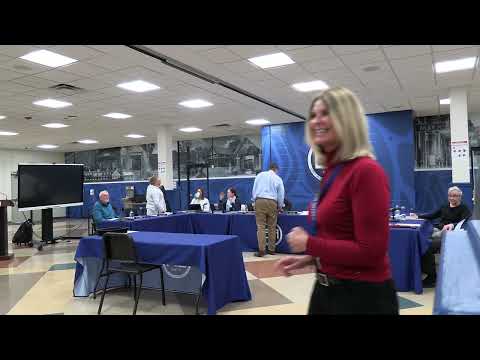
East Aurora board adopts $48.77 million budget after debate over cuts, class sizes and family support center
Summary
The East Aurora Union Free School District board on April 21 adopted a $48,768,722 general fund budget that relies on reserves and proposed cuts to close a projected gap; public commenters and teachers urged the board to preserve class-size limits and the Family Support Center.
The East Aurora Union Free School District Board of Education on April 21 adopted a $48,768,722 general fund budget for 2026–27 after a detailed presentation from district leaders and an extended public-comment period focused on staffing cuts, larger class sizes and the proposed elimination of the Family Support Center.
The budget, presented by Superintendent Mr. Ross and business office staff Miss George, would use a combination of a tax-levy increase up to the district’s cap (an increase projected to bring in $942,625), additional reserve transfers and targeted reductions to balance rising costs and uncertain state aid. ‘‘We’re proposing to go to the tax cap limit, which would be $942,625,’’ Mr. Ross said during the presentation.
Administrators emphasized that uncertainty in state aid made planning difficult: the district assumed a 2% state aid increase for modeling purposes but said the current ‘‘hold-harmless’’ framework may yield only 1% without action from the Legislature, a difference the administration quantified as roughly $79,000.
Most of the policy choices in the adopted budget are intended to close a structural gap. District leadership outlined reductions including two elementary teaching positions at Parkdale, elimination of one middle‑school reading specialist (with some reassignment to Parkdale), cuts to high-school electives, reductions in materials and equipment purchases, and a proposed elimination of the district’s Family Support Center. The plan also trims extracurricular transportation by reducing late-bus runs to two days per week and increases use of a technology reserve by $150,000.
School officials said the proposed staffing and service changes would not immediately eliminate counselors, social workers or psychologists, but would shrink or restructure district-run wraparound services. ‘‘We’re not eliminating any of the staff, but some of the services the Family Support Center provides would be restructured,’’ Mr. Ross said during Q&A.
Community speakers—including parents and teachers—urged the board to prioritize small class sizes and to preserve the Family Support Center. Tara Waterman, who identified herself as a special‑education PTO member, said the prospect of 25–30 students in some classrooms would impede teachers’ ability to identify students who need special‑education evaluation and to implement individualized education programs. ‘‘Thirty kids in a class. That’s impossible,’’ she said, arguing that larger classes risk pushing students into more restrictive placements.
Second‑grade teacher and faculty-association member Michelle Ma told the board the Family Support Center had served 98 families this year—many economically disadvantaged—and urged the district to retain the program because it facilitates access to mental-health counseling, food assistance and other supports that keep students ready to learn.
Board members repeatedly asked for clarifications about class‑size projections and scheduling flexibility; administrators said they would continue to monitor enrollment and scheduling through the summer and that contingency funds and scheduling adjustments (such as adding a sixth assignment where necessary) remain tools to respond to enrollment surges. The district cautioned, however, that if voters reject the budget and it goes to contingency the administration would have to cut roughly $942,625 — about 11.5 full‑time equivalents — because the district could not raise the levy under contingency rules.
The board approved the budget motion after debate and public comment; the motion was recorded as passing on the transcript. Next steps: the district will make budget documents available and hold a public hearing on May 6; the annual budget vote is scheduled for the third Tuesday in May.
Provenance: The budget presentation begins in the transcript at SEG 658; the board’s adoption of the budget is recorded at SEG 2576–2581.
Topics: ["school_budget","class_size","student_services","tax_levy","state_aid"].