Get Full Government Meeting Transcripts, Videos, & Alerts Forever!
Get email alerts on the Renewable Energy topic
No spam. Unsubscribe anytime.
Kern County planning panel backs 1,400‑MW Discovery solar and storage project, forwards it to supervisors
Summary
The Kern County Planning Commission voted to approve staff recommendations to certify the EIR and forward the Discovery Solar PV & Storage project — a proposed 1,400‑megawatt solar facility with multi‑GWh battery storage on roughly 7,700 acres — to the Board of Supervisors, after staff and applicant presentations and public comment emphasizing jobs, taxes and a Joshua tree relocation plan.
The Kern County Planning Commission voted to approve staff recommendations to certify the environmental review for the Discovery Solar PV & Storage project and forward the project to the county Board of Supervisors for final consideration. The commission’s action followed staff and applicant presentations describing a roughly 1,400‑megawatt solar photovoltaic facility with multiple gigawatt‑hours of battery storage proposed on about 7,700 acres in southeast Kern County.
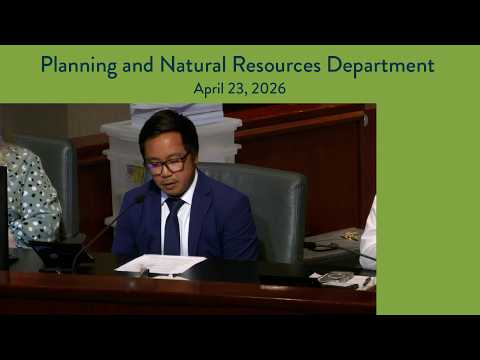
Staff planner Mark Tolentino told commissioners the project would be sited on 473 parcels and would require multiple zone changes, conditional use permits and amendments to the Kern County General Plan circulation element. He summarized the final Environmental Impact Report, the associated mitigation, monitoring and reporting program and said the EIR contains 64 mitigation measures designed to reduce project and cumulative impacts. Tolentino also summarized workforce and fiscal estimates, saying the construction workforce would average several hundred workers per day with peak construction employment in the high hundreds and that operations would require a small permanent staff.
Why it matters: The project would add large‑scale renewable generation and long‑duration storage to Kern County’s energy portfolio, and staff emphasized local economic benefits — including multi‑million‑dollar property tax estimates — as reasons to recommend certification of the EIR and adoption of CEQA findings. The Planning Commission’s approval is advisory; final land‑use entitlements and related ordinances will be considered by the Board of Supervisors.
Applicant comments and local support Sam Sowers, vice president of development for Tarragon, the project developer, thanked county staff and reiterated the company’s experience in Kern County and its plan to use union labor. In his remarks Sowers cited estimated tax revenues and local economic benefits, and said the company expects initial operations in late 2029 under its current schedule.
Multiple labor and business groups spoke in support during the public comment period. Richard Chapman, president and CEO of the Kern County Economic Development Corporation, highlighted capital investment and tax revenue. Brian Holt of IBEW Local 428 and other labor representatives described apprenticeship and training opportunities the project could provide.
Environmental concerns and mitigation measures A property owner who abuts the site asked how Joshua trees on the project area would be protected. Eric DeVault, Tarragon’s vice president for development and mitigation lead, described a preservation and relocation plan: staff and the applicant identified about 420 acres of Joshua tree woodland to be preserved on site, and DeVault said the company plans an extensive relocation effort that he described as moving about 10,000 Joshua trees to infill and restoration properties (including a conservation property referred to in the staff presentation). DeVault characterized that effort as building on prior pilot work the company has undertaken.
High-speed rail and project timing Staff acknowledged a letter from the California High Speed Rail Authority noting an adopted alignment that bisects part of the proposed site. Director Murphy told the Commission the adopted alignment could potentially affect roughly 180–200 acres (which staff estimated might equate to about 30 MW of the facility), but he recommended against requiring the applicant to reserve specific easements or redesign the site plan at this time because the alignment’s timing and finalization remain uncertain.
Numbers and uncertainties in the record The staff report and applicant presentation include several numerical estimates. The transcript records the project’s generation capacity as about 1,400 MW; battery storage is described in the record with inconsistent phrasing (the staff presentation referenced "eight gigawatt hours" and elsewhere "one gigawatt of battery energy storage capacity," while the applicant later referred to "8,000 megawatt hours"). Staff also provided tax‑revenue estimates taken from the report (the presentation cited approximately $758 million in total property tax contribution over 35 years, about $207 million in the first five years and roughly $44 million in the first year of full operations). The record contains inconsistent phrasing and numeric formats on these points; the Planning Commission transcript preserves those staff and applicant statements but does not resolve the internal inconsistencies.
Commission action and next steps After questions from commissioners about vegetation buffers, project lifespan and process, a commissioner moved to approve item five "as read into the record." The motion was seconded and the transcript records the vote as "Three Ayes to absent; motion carries." Mr. Murphy said there is no further local appeal at the Planning Commission level and that staff plans to transmit the item to the Board of Supervisors for final consideration with a mid‑June hearing target (the transcript references both June 16 and June 18 in the same exchange).
What’s next: The Board of Supervisors will review the Planning Commission’s recommendation and consider final approval of the entitlements and associated ordinances and resolutions; the Planning Commission’s action is an advisory certification and recommendation under the county’s land‑use process.
Reporting note: Quotes and attributions are taken verbatim from the Planning Commission transcript. The transcript contains inconsistent spellings of the developer’s name and varying numeric formats for storage and tax estimates; this article standardizes the developer name as "Tarragon" for clarity and presents the numeric estimates as stated in the record with a note where the record is inconsistent.