Get Full Government Meeting Transcripts, Videos, & Alerts Forever!
Get email alerts on the Youth Vocational Rehabilitation topic
No spam. Unsubscribe anytime.
Connecticut agency outlines Level Up program to help students with disabilities transition after high school
Summary
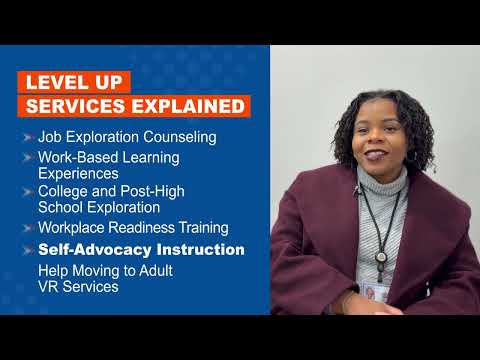
Jayla Berry, a Level Up counselor with Connecticut Aging and Disability Services's Bureau of Rehabilitation Services, described Level Up as a free program for students with disabilities ages 16—22 that offers six supports (career exploration, work experiences, college planning, workplace skills, self-advocacy, and transition to adult VR) and recommends connecting about two years before graduation.
Jayla Berry, a Level Up counselor with Connecticut Aging and Disability Services's Bureau of Rehabilitation Services (BRS), outlined the Level Up program and how it helps students with disabilities prepare for life after high school.
"Level Up is made just for students with disabilities between the ages of 16 and 22," Berry said, describing the free program as a bridge to work or postsecondary education. She said BRS, the state agency that oversees vocational rehabilitation for residents with disabilities, created Level Up to remove barriers that make it hard for someone with a disability to get hired and to build confidence and workplace skills.
Berry gave a rundown of six core supports Level Up provides. The program offers job exploration counseling to help students identify careers that match their interests and strengths; work-based learning such as job shadowing, internships, or short-term work experiences to give hands-on exposure to workplaces; and assistance exploring college or trade-school options and the steps needed to enroll. "We support students with job exploration counseling," Berry said. She added that Level Up also provides workplace readiness training—skills like showing up on time, working on a team and communicating effectively—and instruction in self-advocacy so students can request accommodations and supports at school and on the job.
Berry described the sixth support as help transitioning into adult vocational rehabilitation services: Level Up counselors connect students to adult VR counselors and encourage students to apply for full VR services so supports continue after the program ends. "When you are close to leaving a Level Up program, we help to make sure you have a smooth transition," she said.
Berry said Level Up services are provided by Level Up counselors or community partners and can take place at school or in the community during or after school hours. Staff work with schools and families to address transportation needs and may identify community resources to reduce that barrier. She recommended that families and school staff reach out to Level Up about two years before a student's expected graduation to allow time for meaningful preparation. "The best time to connect with Level Up is about two years before you graduate high school," she said.
To enroll or learn more, Berry said students can be referred by school counselors, special education staff, parents, or community partners, or families can contact Level Up directly. "We look forward to working with you," she added.