Get Full Government Meeting Transcripts, Videos, & Alerts Forever!
Get email alerts on the Life Safety Facilities topic
No spam. Unsubscribe anytime.
District outlines roughly $6 million in life-safety projects and weighs bond and tax options
Summary
Consultant Mike Gold told the board the district’s life-safety amendment list totals about $6 million in eligible work (toilets, flooring, air handlers, roofing); board discussion focused on amendment timelines, a five-year completion clock if approved, and whether to pursue bonds or a limiting-rate tax increase.
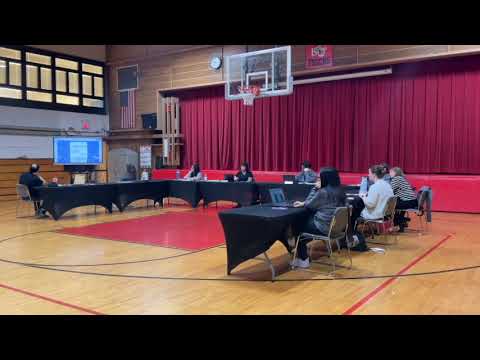
Consultant Mike Gold and district staff presented a facilities update to the Norridge SD 80 board on April 23 that identified life-safety projects across district buildings and described options for funding that work.
Mike summarized the scope of eligible life-safety items — interior renovations (toilets, flooring, ceiling tiles, doors), site work (pavement, playgrounds, ramps), mechanical replacements (air handlers, exhaust fans, pumps) and exterior roofing — and said the list presented would be approximately $6 million in potential life-safety amendment work.
The board discussed how amendments are prepared and reviewed by the state: if the district submits an amendment and the state approves it, the district typically has five years to complete the approved work. Mike explained that the state can approve parts of an amendment and that more specificity (which bathrooms, which doors, exact locations) is necessary when assembling the submission.
Board members and staff also reviewed financing choices: submitting targeted life-safety amendments and then selling bonds to pay for approved projects; or pursuing a limiting-rate (tax-base) increase that raises the district’s permanent base revenue. Administration reviewed recent local referendum history in neighboring jurisdictions to illustrate how districts have combined building bonds and limiting-rate increases, and emphasized that the district must align project scope, bond planning and public engagement before any ballot measure.
Mike advised that once an amendment is approved by the state the district has a finite completion window and that board direction is required to finalize the amendment package and financing approach. No formal funding decision was made at the meeting; staff will refine the project lists and return with a proposed scope and timeline for the board’s consideration.