Get Full Government Meeting Transcripts, Videos, & Alerts Forever!
Get email alerts on the Budget Audit topic
No spam. Unsubscribe anytime.
Auditors give Stewartville a clean opinion and detail reserves, revenues and debt
Summary
Auditors from Smith Schaefer Associates presented a clean, unmodified opinion on Stewartville’s 2024 financial statements, noting strong fund reserves, higher property tax and investment income, manageable debt service projections and no exceptions in Minnesota legal compliance testing.
Andrew of Smith Schaefer Associates presented the city’s 2024 year‑end financial statements and said the firm issued a clean, unmodified audit opinion under generally accepted accounting principles. Andrew said the opinion reflects a risk‑based sampling approach and “reasonable” assurance that the financials are fairly stated, though not absolute certainty.
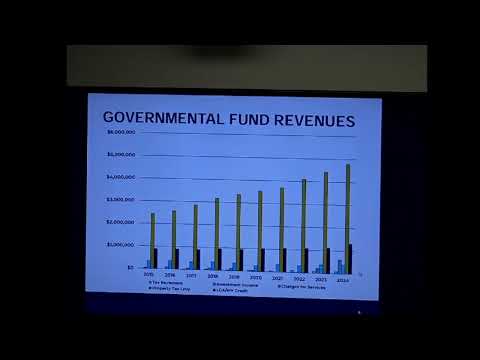
The audit presentation outlined major revenue and expenditure drivers. Tax capacity was reported at about $7,250,000 (up ≈$620,000, ~9% year over year), and property taxes collected were about $4,789,000 (up ≈$356,000, ~8%), representing roughly 52% of governmental revenues in 2024. Auditors also noted a substantial rise in investment income (about $380,000) and a one‑time state road project in the prior year that affected year‑over‑year comparisons.
Andrew summarized fund types and reserves, saying the city held an unassigned and committed general fund balance of approximately $2,117,000, or about 60% of 2024 general fund expenditures. He highlighted that special revenue funds (library, civic center, volunteer fire, economic development) were generally under budget and that the city’s capital projects funds totaled about $3,273,000, including a separated library capital fund of roughly $1,175,000 funded by property taxes, interest and donations.
On liabilities and long‑term obligations, auditors reviewed outstanding special assessment and general obligation bonds with scheduled payoffs that will reduce debt service in coming years. Auditors presented a five‑year debt‑service projection (about $1.1 million in 2025, dropping to roughly $900,000 in 2026 as several bonds mature). The city’s recorded share of a multi‑employer pension underfunding was listed at about $620,000, while the fire relief pension plan showed an asset of about $377,000.
Enterprise funds for water, sewer and stormwater showed positive operations and healthy cash positions. The water fund’s cash and investments were presented at about $4.2 million; auditors noted routine transfers from enterprise funds to the capital projects fund and the general fund as part of established practice.
Andrew told the council that compliance testing for Minnesota legal requirements (conflict of interest, collateral for public funds, contract and bid law, among others) found no exceptions. He also said the city has received the Government Finance Officers Association certificate of achievement for 17 consecutive years, with only minor editorial suggestions for the financial statements.
Mayor Jimmy John King and council members asked brief clarifying questions during a short Q&A; no substantive exceptions or follow‑up actions were recorded in the meeting transcript. The auditors thanked city staff for timely documentation and support during the audit process.
The council received the audit presentation; no formal council action on the audit itself was recorded other than acceptance and the opportunity for questions. The auditors indicated they will assist with GFOA submission if requested.