Get Full Government Meeting Transcripts, Videos, & Alerts Forever!
Get email alerts on the School Budget Cuts topic
No spam. Unsubscribe anytime.
Gresham-Barlow budget would cut $10.2 million, eliminate most elementary music positions; parents and students urge reversal
Summary
The Gresham-Barlow budget committee reviewed a proposed 2026–27 budget that trims about $10.2 million and roughly 70 positions, including major reductions to elementary music and some counseling supports. Dozens of parents and students urged the committee to restore music, AVID and counseling during an extended public-comment period.
The Gresham-Barlow School District on April 29 presented a proposed 2026–27 budget that district leaders said would close a structural funding gap by reducing roughly $10.2 million in services and eliminating about 70 positions across elementary, middle, high school and district offices. The superintendent warned the cuts were driven by rising costs, declining enrollment and flat state funding.
"The proposed budget includes a $10.2 million reduction in services," Superintendent Tracy Player told the budget committee, saying the package was designed to protect core student experiences while aligning spending to realistic revenues.
The budget message framed the cuts as a response to a long-term funding shortfall: the district projects continued enrollment decline, rising labor and insurance costs, and reliance on roughly $18 million in grant funding to sustain critical supports. Staff described how the formal legal appropriation occurs at a major-function level and emphasized that line-item staffing plans in the packet are planning documents, not legally binding appropriations.
Public comment that followed focused heavily on the proposed elementary music reductions. More than a dozen parents, alumni and students told the committee they rely on elementary music to support literacy, social-emotional development and pathways into secondary music programs. "I cannot overstate the importance of elementary education, elementary music education specifically," said Marie Johnson, a parent and community member. Student speakers said music and AVID programs were the reason they attended school and credited those programs with scholarship and college-readiness outcomes.
Students and community speakers urged alternatives to outright eliminations, including reducing some positions to halftime rather than eliminating them, reallocating existing district resources, and pressing state lawmakers for increased funding. Organizers also cited a petition with more than 2,000 signatures and a district survey of over 900 respondents showing broad community support for electives and music.
District staff answered technical questions about charters, capital set-asides and technology refresh plans. Staff explained the $3.76 million transfer increase for technology reflects a multi-year replacement schedule (Chromebooks, staff laptops) and that capital-project funds are restricted for major facility work. Committee members asked whether administrative FTE had been right-sized in tandem with declines in student enrollment; staff said some administrative positions are supported by grants and compliance needs have increased.
Committee members pressed staff about reserve policy: the proposed budget would set an ending general-fund balance around 7.1%, below the board policy target of 8%. Finance staff said a single day of district operations costs about $710,000, and even a seemingly small percentage change can translate into days of operating cash.
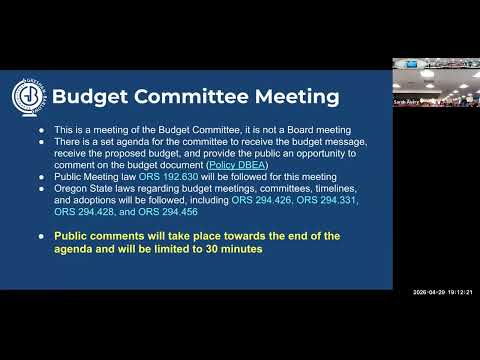
No final budget vote was taken; the committee elected John Hartsock chair and Garrett Wood vice chair and approved a motion to move public comment earlier on the agenda. District leaders said they will return in future meetings with additional clarifications, and the board is expected to consider a formal resolution at its May business meeting.
What’s next: Budget committee members asked staff for more detail on administrative FTE, the legal implications of reduced licensed staffing in arts and the precise mix of transfers and one-time spending that produce the proposed numbers. The district asked the public to submit follow-up questions in writing so staff can prepare detailed responses for the next meeting.
(Reporting note: quotes and attributions are taken from the official meeting transcript. The district is identified in materials and spoken remarks as Gresham-Barlow.)