Get Full Government Meeting Transcripts, Videos, & Alerts Forever!
Get email alerts on the Aumnf topic
No spam. Unsubscribe anytime.
Senator urges Congress to craft AUMF that defines goals, metrics and exit plan for Iran conflict
Summary
On the Senate floor a senator argued Congress must adopt an authorization for the use of military force (AUMF) that sets clear objectives, success metrics and an exit strategy for U.S. operations related to Iran, rather than issuing the executive an open-ended mandate or an abrupt withdrawal via a War Powers measure.
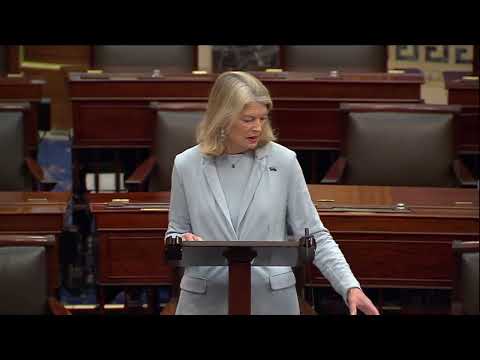
A senator on the Senate floor urged Congress on Wednesday to adopt an authorization for the use of military force tailored to the current conflict with Iran, saying lawmakers must set objectives, require metrics for success and establish exit criteria rather than give the executive branch an open-ended mandate.
"We now find our nation at war with Iran," the senator said, arguing that U.S. forces and allies face ongoing risks and that an abrupt withdrawal would leave Iran's critical capabilities intact and invite retaliation. The speaker cited continued disruptions to shipping through the Straits of Hormuz and asserted that Iran and its proxies have posed deadly threats to Americans over many years.
The senator criticized recent War Powers Resolution votes, saying those measures would have required removing U.S. forces from active hostilities without a framework for what comes next. "The answer is not a blank check for another endless war, nor is it open-ended authority for the administration with no guardrails," the senator said, describing a preferred AUMF as a restraint that "would require the president to come to Congress with a clearly defined political and military objectives," notice of changing objectives, and exit criteria.
The speaker said he has been working with colleagues on draft language that would require reporting to Congress, define metrics for success and provide transparency about objectives and timelines. He told colleagues he was not introducing the measure that day but would introduce an AUMF once the Senate reconvenes if, after the 60-day mark, the administration had not presented a credible plan.
Explaining his opposition to recent War Powers measures, the senator pointed to the risk of tying the military's hands during an ongoing campaign and cited the 2021 withdrawal from Afghanistan as an example of the dangers of a precipitous exit without a strategy. He emphasized that Congress's constitutional power to declare war and authorize force requires lawmakers to engage, debate and, where necessary, restrain the executive while also ensuring clear objectives for military action.
The senator also framed his remarks in human terms, noting the loss of U.S. service members in the conflict and saying members of Congress owe troops "a clear, a thoughtful, a rational plan for what comes next." He closed by reiterating support for the military and yielding the floor.
The senator's remarks did not include a bill text on the floor; he said the AUMF would be introduced later if the administration failed to provide sufficient clarity and reporting to Congress.