Get Full Government Meeting Transcripts, Videos, & Alerts Forever!
Get email alerts on the Land Use Hillside Overlay topic
No spam. Unsubscribe anytime.
Plan commission schedules public hearing on Marchstone request to shrink hilltop buffer from 150 to 50 feet
Summary
The Village of Cross Plains Plan Commission voted May 4, 2026 to schedule a public hearing on proposed hillside overlay ordinance amendments that would reduce the hilltop buffer from 150 feet to 50 feet for the Marchstone development; developers say the change would preserve roughly 20–25 lots and improve project economics, while commissioners raised visual, erosion, and village‑wide policy concerns.
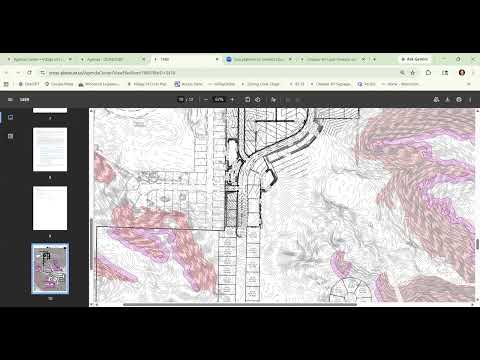
At its May 4, 2026 meeting the Village of Cross Plains Plan Commission voted to schedule a public hearing on proposed amendments to the hillside overlay ordinance requested by the Marchstone development. The amendments would reduce the hilltop buffer from 150 feet to 50 feet and add explicit exceptions that would allow some private recreation, roads and stormwater features within the currently protected hillside area.
The Marchstone team told the commission that the change would make their lot layout feasible and estimated that the larger 150-foot hilltop area would remove about 20 to 25 lots from their plan and reduce project value by an estimated $5–7 million. The developer also presented a third‑party ecologist’s tree inventory and said the project would remove many poor and fair trees while restoring other areas with prairies and new plantings.
Commissioners pressed for technical clarity on several points. They asked how the ordinance defines 'hilltop' versus 'hillside' and whether the buffer applies to structures or to property lines; staff explained the current ordinance measures hilltop as an inland distance (150 feet) from the point the slope levels out and said the proposed language would be clarified to make clear the regulation applies to improvements/structures rather than entire lot lines. Several commissioners raised concerns about the ordinance’s original intent — preserving visible hilltops and the village viewshed — and about potential erosion and impacts to neighboring properties if disturbance allowances are broadened.
Members also discussed alternatives to a village‑wide ordinance change, including granting a project‑specific waiver. Staff noted a waiver process carries added procedural requirements and a super‑majority vote threshold and could add timing and financial risk for the developer; staff explained that advancing an ordinance amendment now would be a more predictable step before regional review and final plats.
The commission asked staff to correct an apparent packet error: the agenda referenced proposed changes to subsection 84.95 (permitted and conditional uses and a new subsection) but the detailed language for that subsection did not appear in the meeting packet. Staff said the header likely remained from an earlier draft and that the missing or corrected language will be provided before the public hearing.
The commission discussed noticing timelines and agreed to schedule the hearing so the public could review the finalized text. By roll call vote, Commissioners Cree, Hillbrand, Trustee Brochious, Commissioner Johnson, Trustee Cattlebeater and President Lang voted in favor; one commissioner was absent and the motion to schedule the public hearing carried. Staff indicated the earliest technically feasible hearing date under legal notice requirements would be May 28, but recommended the commission hold the hearing at its June 1 meeting to allow proper notice in consecutive papers.
Next steps: staff will finalize ordinance language and packet materials (including the missing subsection language and clearer maps showing 50‑ vs 150‑foot lines), publish the required newspaper notices, and present the item at the scheduled public hearing so the commission can receive public input before any formal vote to adopt ordinance changes.