Get Full Government Meeting Transcripts, Videos, & Alerts Forever!
Get email alerts on the Accreditation Reform topic
No spam. Unsubscribe anytime.
U.S. Department of Education opens negotiated rulemaking to reshape accreditation
Summary
The U.S. Department of Education on Monday opened a negotiated rulemaking committee to rewrite recognition rules for college accreditors, with Undersecretary Nicholas Kent urging sweeping changes to accountability, competition and credit transfer to restore public trust in higher education.
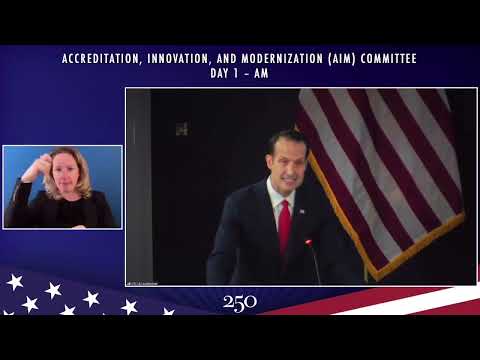
The U.S. Department of Education convened a negotiated rulemaking committee to overhaul how accrediting agencies are recognized and supervised, department officials said during opening remarks.
Undersecretary Nicholas Kent framed the effort as an urgent response to long‑running concerns about rising student debt, inconsistent outcomes and declining public confidence. “When public confidence is this low … incremental change is not enough,” Kent said, arguing the department must pursue “serious reform” to ensure taxpayer dollars support programs that deliver meaningful returns for students.
Kayla Mack, the session facilitator, told negotiators the committee will work under protocols set out for negotiated rulemaking and review draft regulatory text during the coming weeks. She outlined procedural rules—green comment cards, three‑minute speaking limits and a final consensus check at the end of the second week—intended to manage deliberations and produce a durable agreement.
Kent reviewed accomplishments and priorities the department says inform the work: restoring the Public Service Loan Forgiveness program, simplifying student loan repayment, creating a workforce Pell program, and strengthening fraud prevention. He said accreditation must reward student outcomes, improve credit mobility and avoid conflicts of interest between accreditors and related trade associations.
The session included introductions from constituency representatives who will participate in deliberations, including student borrowers, veterans’ organizations, public and private institutions, proprietary institutions, state officials, existing accrediting agencies, nascent accrediting organizations and public‑interest groups. Elizabeth Daggett, director of the department’s accreditation group, and Jeff Andre, deputy assistant secretary for postsecondary education, also introduced department staff who will support the process.
Mack told the committee that the negotiated rulemaking will use pulse checks—nonbinding indicators of consensus—and one final consensus check covering all topics at the end of week two. Members may call caucuses and submit written proposals to be circulated and discussed.
The meeting will resume after a lunch break with a department overview of draft recognition regulations and a data presentation by the Office of the Chief Economist.