Get Full Government Meeting Transcripts, Videos, & Alerts Forever!
Get email alerts on the Affordable Housing topic
No spam. Unsubscribe anytime.
Planning Commission approves 64‑unit Rowan Veil affordable housing project near South Congress
Summary
The Austin Planning Commission unanimously approved a plan amendment and rezoning to allow Rowan Veil, a 64‑unit deeply affordable development at 206 E. Annie St., after extensive public testimony both for and against the project; the developer pledged design changes and a 45‑year affordability covenant.
The Austin Planning Commission on May 12 voted unanimously to approve a plan amendment and rezoning that will allow Rowan Veil, a 64‑unit income‑restricted housing development on the South Congress corridor.
The project, on a roughly 0.9‑acre site at 206 E. Annie Street and 1710 Brackenridge Street, was presented to the commission by planning staff as consistent with Imagine Austin and the city's strategic housing goals. Planning staff recommended MF‑3 NP zoning to enable 64 deeply affordable units located within walking distance of high‑frequency transit and a future rail stop.
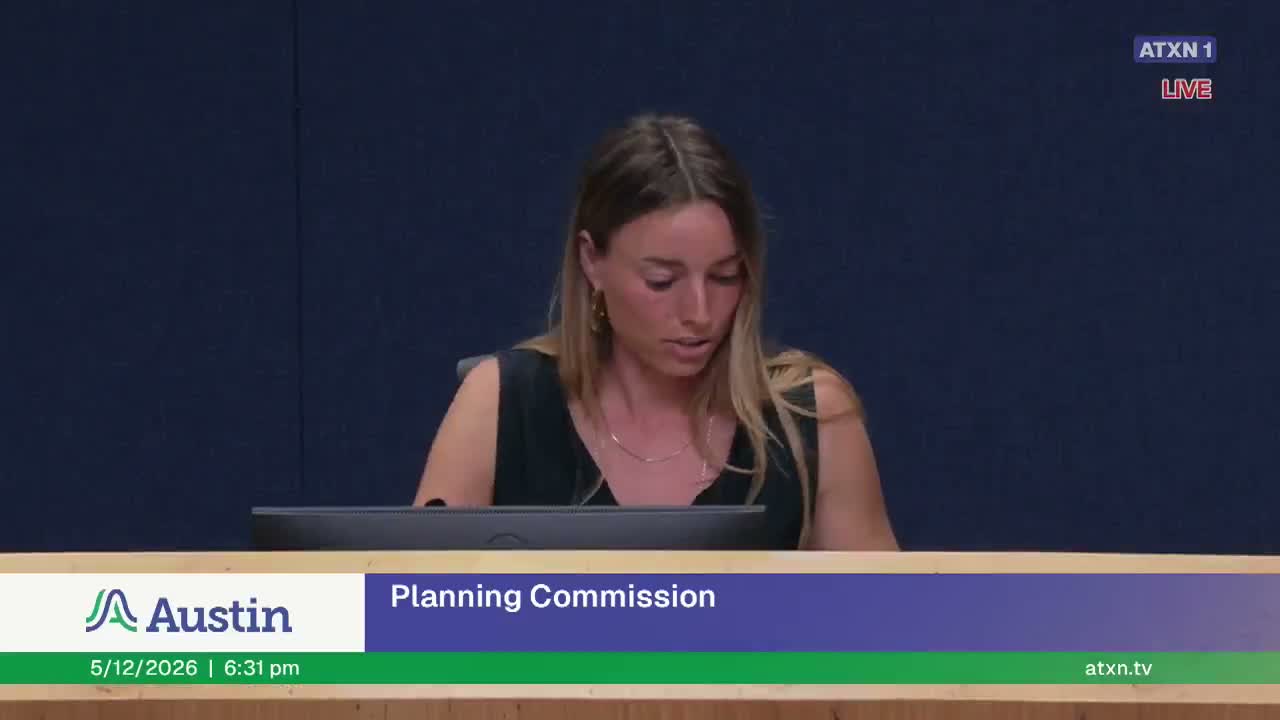
Abby Tatko, representing Osta Industries and the applicant, told commissioners the development would be 100% income‑restricted with an on‑site pre‑K and would preserve mature trees on the site. Tatko said the applicant reduced the request from an earlier MF‑4 proposal to MF‑3, lowered the unit count from about 75 to 64, increased on‑site parking and adjusted building massing after neighborhood outreach, and had committed to a land‑use restriction agreement to secure long‑term affordability.
Residents and workers who supported the project said it would provide housing for teachers, firefighters and service workers priced out of central Austin. “We need more young families in Travis Heights and this is a great opportunity,” said David Goss, a neighborhood resident and parent, urging approval.
Many neighbors opposed the rezoning, focusing on scale, massing, traffic, and process. Shiva Mayer, speaking for a block of neighbors, criticized the timeline and said the developer had rejected neighborhood requests for changes to massing, parking and street‑level design. “We are not asking to reject growth. We are asking to reject this application as filed,” Mayer said, urging commissioners to delay action to allow more substantive compromise.
Commissioners asked detailed questions about parking (noting the project increased parking in response to neighborhood concerns), traffic analysis and whether subsidies or costs would affect long‑term rents. Tatko said Texas Department of Housing and Community Affairs (TDHCA) rules and a land‑use restriction agreement would require affordability provisions for 45 years. Transportation staff said the neighborhood traffic analysis followed the city’s standard mid‑week counting procedures.
Commissioner Ahmed moved to approve the applicant’s request; Commissioner Maxwell seconded. Commissioners who spoke in favor cited the acute need for subsidized housing in high‑opportunity areas, proximity to transit and the project’s contributions to the city’s housing goals. The motion passed unanimously.
Next steps: zoning approval allows the applicant to proceed to site planning and permitting, where specific engineering and design details—including final massing, access, and queuing for the pre‑K—will be reviewed and may be further refined. The applicant said it would continue neighborhood engagement during permitting.
Rowan Veil’s final affordable‑housing covenants and funding approvals will be governed by TDHCA award and the required land‑use restriction agreements; the city’s role will include permitting and any gap funding or fee waivers the developer pursues.