Get Full Government Meeting Transcripts, Videos, & Alerts Forever!
Get email alerts on the Public Safety topic
No spam. Unsubscribe anytime.
Winters police chief cites 38% drop in Part I crimes but warns of staffing strain
Summary
Chief Miller told council the Winters Police Department reported a 38% decline in Part I crimes across a five‑year window, highlighted technology upgrades and community programs, but also outlined staff attrition, recruitment costs, training gaps and ongoing felony investigations.
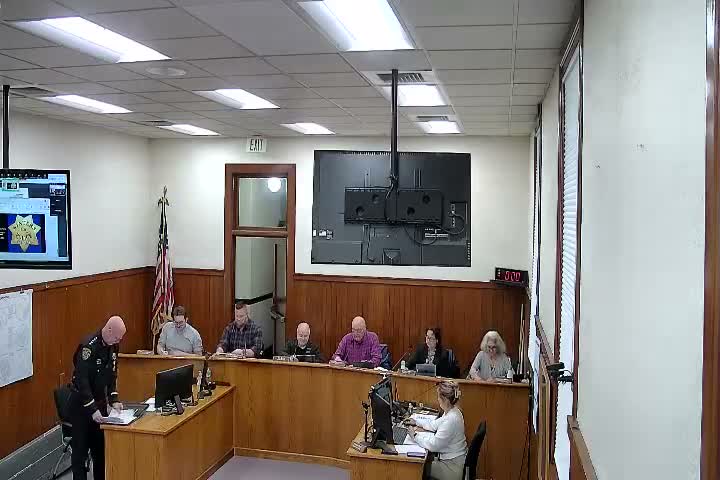
Chief Miller presented the Winters Police Department’s 2025 annual report to the City Council, describing technology upgrades, community outreach and a staffing shortage that the department says has limited proactive policing.
Miller said the department recorded a 38% decline in Part I crimes over the five‑year comparison window, attributing reductions to multiple factors and to national trends in preliminary reporting. He described the department’s recent adoption of a records management system (RINS) capable of National Incident Based Reporting (NIBRS) reporting and expanded use of vendor tools (Axon, Flock Safety) for digital evidence and automated license plate reader support.
At the same time, Miller described ongoing personnel challenges: the department has 12 full‑time sworn positions authorized (chief, three sergeants, eight officers) but was operating with roughly a 27% vacancy rate at the time of the presentation. He described attrition since 2024–2025 (retirements, medical resignations, transfers to other agencies), recruitment and hiring costs (about $1,035 per hiring process, academy recruits roughly $50,000 each), and training needs to get recruits to solo patrol.
Miller said several investigations remain open — mostly felony investigations, including Internet crimes against children (ICAC) referrals — and he warned that with fewer field training officers and instructors the department’s ability to return to proactive patrol work is constrained. He framed the department’s priorities for the year: complete post‑required training, fill detective and sergeant positions, pursue California‑centric accreditation via the California Police Chiefs Association’s CAST cohort, and implement full e‑citation integration with the courts.
Councilmembers expressed appreciation and asked about the limits of local data (convictions are handled by the district attorney) and about program details; resident Kaye Ladish commended the department’s transparency and asked for more public information about the ABLE (active bystander) program and data privacy for Flock Safety. Miller said the department will continue to post material publicly and welcomed follow‑up on program details.
Next steps: city staff and the police chief said they will continue recruitment and training efforts, pursue accreditation efforts, and work with council on staffing and program support.