Get Full Government Meeting Transcripts, Videos, & Alerts Forever!
Get email alerts on the Water Quality topic
No spam. Unsubscribe anytime.
Winters reviews plan to meet chromium‑6 drinking‑water limit by Oct. 2027
Summary
City staff and Kennedy Jenks consultants presented an implementation plan to meet a state chromium‑6 maximum contaminant level of 10 µg/L by Oct. 1, 2027. The plan proposes ion‑exchange treatment at Well 8, pilot testing at Well 7, planning‑level construction estimates in the low millions, and a workplan to pursue state loans and grants.
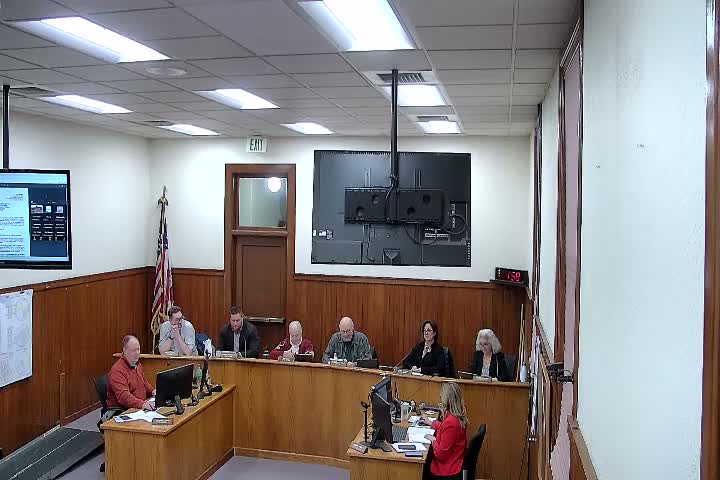
The Winters City Council on Jan. 20 heard a technical briefing on the city’s plan to comply with California’s reestablished hexavalent chromium (chromium‑6) maximum contaminant level of 10 micrograms per liter by Oct. 1, 2027. City staff said the compliance deadline requires “completing the treatment design and permitting in time to advertise bids in late 2026.”
Sachi Idagaki, a civil engineer with Kennedy Jenks Consultants, told the council the city’s most recent sampling shows Wells 5, 6 and 7 exceed the 10 µg/L threshold while Wells 2 and 4 are currently below it. Idagaki summarized the Division of Drinking Water’s approved chronic treatment technologies — reduction/coagulation/filtration (RCF), reverse osmosis, and ion exchange — and said ion exchange is the simplest option for wellhead applications and the preferred near‑term approach for the Well 8 site because of available space. “This implementation plan is a document required by the division of drinking water to establish the compliance pathway that the city plans to take,” she said.
Idagaki presented planning‑level cost estimates and a schedule: construction for the treatment train was estimated at about $5,000,000, with bid costs potentially near $9,000,000 after markups and a broader planning range the consultant put between roughly $5.9 million and $23 million depending on contingencies and final design. She cautioned the numbers are preliminary: “There’s still quite a bit of unknowns,” and the predesign stage will produce vendor quotes and a more refined operations and maintenance estimate.
Staff said Kennedy Jenks will return with a contract amendment for a predesign report, and the city will issue an RFP for a financial consultant to run a rate study using the predesign planning costs. The city also plans to pursue funding sources such as the state Drinking Water State Revolving Fund, the SaFER (Safe and Affordable Funding for Equity and Resilience) program, Proposition 4 allocations, and IBank loans.
Council members pressed staff and the consultant on operational scenarios for fire flow, the possibility of using alternative wells, and the timeline for controls and permitting. In response, staff said Wells 2 and 4 could serve average‑day demand while treated Well 8 would supplement peak and fire‑flow conditions; they noted Well 6 might serve as a standby well but would require flushing and re‑sampling after certain events. Staff also described plans for a pilot test at Well 7 to verify the waste profile and regeneration cycle before final design.
Members of the public and several councilors urged the city to examine alternatives in parallel — including testing a potential Well 9 or reactivating Well 3 — to avoid the highest‑cost treatment paths if a cleaner source could be developed. City staff acknowledged long lead times for control systems and recommended demonstrating steady progress to state regulators to reduce the risk of enforcement fines.
Next steps: staff will bring a Kennedy Jenks contract amendment to the Feb. 3 meeting to initiate predesign and will pursue a rate study and funding strategy in the coming months. The consultant said pilot testing and refined sampling should be completed before final design to narrow the cost range and inform procurement.