Get Full Government Meeting Transcripts, Videos, & Alerts Forever!
Get email alerts on the Elections And Governance topic
No spam. Unsubscribe anytime.
Milpitas introduces ordinance to let council appoint or call special election for vacancies
Summary
The council introduced (first reading) a draft ordinance to replace a 1976 vacancy rule, allowing the council, within 60 days of a vacancy, to appoint a replacement or call a special election; staff cited a county estimate that a standalone special election could cost up to $3 million.
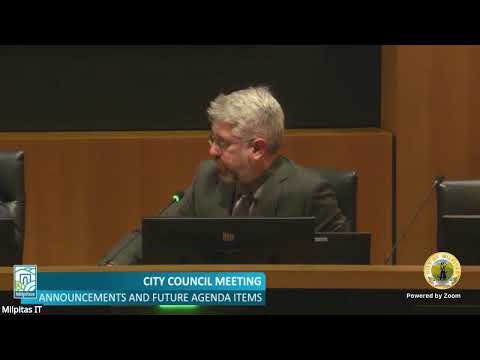
The Milpitas City Council voted to introduce an ordinance that would modernize a nearly 50‑year‑old local rule requiring a special election each time a council seat becomes vacant.
Staff told the council that the current ordinance dates to 1976 and that California's statutory framework changed in 1992. Assistant City Manager Jared Hernandez said the city consulted the county registrar, which estimated that a standalone special election could cost "up to or over $3 million" — a significant share of the city's general fund. "Milpitas is the only city we’re aware of in Santa Clara County that currently mandates a special election for every council vacancy," Hernandez said.
Councilmember Evelyn Chua, who introduced the amendment, said the hybrid option would give the seated council 60 days to either appoint a replacement or call a special election depending on circumstances. She said the approach would save taxpayers money while preserving continuity of governance. The draft ordinance includes safeguards commonly used in other jurisdictions: appointments cannot leave a majority of the council as appointees and the council would apply a clear process for any appointment (e.g., application pool, consideration of near vote‑getters from the last election).
City Attorney Christian Curtis and the city clerk briefed the council on the timeline and statutory constraints: the 60‑day requirement for choosing appointment versus election is in state law and the city’s draft mirrors permitted options in California Government Code. Councilmember Chua moved to introduce the ordinance and to waive reading beyond the title; the motion passed unanimously.
If adopted, the change would let future councils weigh the fiscal cost of a special election against the public’s preference for an election in the context of each vacancy. Staff said they will return with the ordinance for formal adoption on the next available agenda with an analysis of implementation mechanics and public‑engagement options.