Get Full Government Meeting Transcripts, Videos, & Alerts Forever!
Get email alerts on the Transportation topic
No spam. Unsubscribe anytime.
Saranac Lake board reviews electric-bus study, flags range and charging hurdles
Summary
Board members heard an initial CPL study showing district routes that range from about 54 to as much as 196 miles per day, raising questions about battery size, charging management, garage power upgrades and grant timing for a phased pilot.
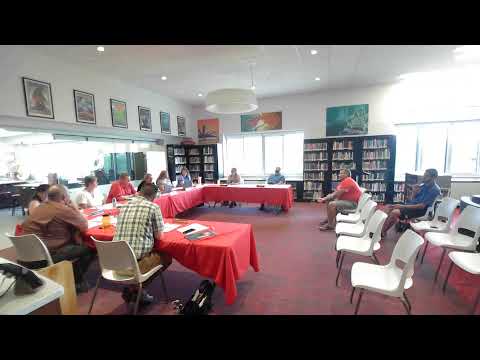
The Saranac Lake Central School District Board of Education reviewed initial findings from a consultant study on June 18 that outlined range, charging and infrastructure challenges for switching school buses to electric power.
Chair said the consultant had assessed route lengths, dwell time and charger requirements and reported that the district’s shortest daily bus run is about 54 miles while the longest can reach about 196 miles. "Our lowest run right now is 54 miles but our highest run for a bus is 196," the Chair said while reviewing the report, underscoring implications for battery capacity and cost.
The presentation identified three shorter routes the consultant recommended as pilot candidates and emphasized charge-management as a central operational constraint. The report notes that midday dwell time could be used for opportunistic charging but cautioned against charging all vehicles simultaneously because of peak-demand costs. "One of the things they talked about is charging enough to do the next run; it doesn't necessarily mean bringing them all up to maximum during the middle of the day," the Chair said.
Board members and staff raised site and garage questions: the study included a site-layout grid and examined whether the current bus garage can accommodate charger spacing and fire-safety setbacks. The Chair said some electrical upgrades would likely be needed if charging were installed at the existing garage and that some costs will depend on the outcome of utility discussions. "There would probably have to be some electrical upgrades within the building," the Chair said.
Funding timing also shaped the discussion. Board members noted that federal and state grant programs can cover large portions of conversion costs but that programs often prioritize applicants with a detailed, shovel-ready plan. The presentation said districts with clear implementation plans tend to fare better in competitive funding rounds.
The report also raised lifecycle questions about batteries and parts: presenters said battery capacity degrades over time and that batteries removed from buses can be repurposed for stationary storage. The Chair said the study's initial materials did not include a uniform external verification of manufacturer range claims and that this is an emerging issue in the market.
The board directed staff to use the CPL data to finalize a plan for the August state progress report and to continue talks with the utility about distribution upgrades and possible cost-sharing. The Chair said the CPL work will help the district apply for grants and show funders a workable plan.
What happens next: staff will refine the data, pursue further site planning and present a follow-up to the board in advance of the August reporting requirement to the state.