Get Full Government Meeting Transcripts, Videos, & Alerts Forever!
Get email alerts on the Clinical Safety Concerns topic
No spam. Unsubscribe anytime.
Physicians and medical staff tell Alameda County supervisors cuts threaten Level‑1 trauma services and patient safety
Summary
A coalition of 332 clinicians and multiple frontline doctors told the Board of Supervisors that AHS’s proposed staffing and program reductions risk the county’s only Level‑1 trauma center, citing gaps in vascular surgery, anesthesia and lab staffing; the medical executive committee asked the Board to strengthen oversight.
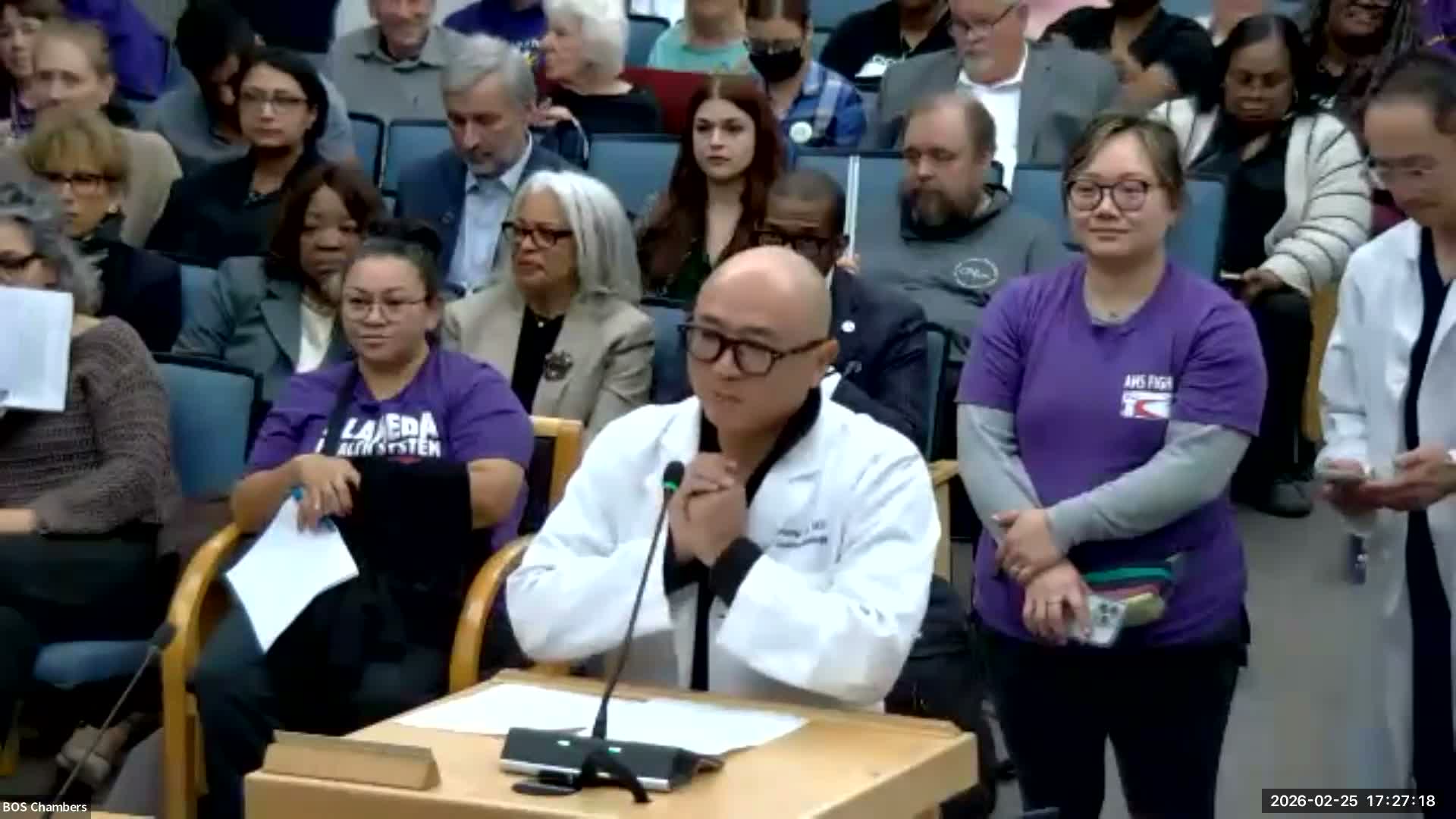
A large contingent of Alameda Health System physicians and frontline clinicians on Feb. 25 told the Alameda County Board of Supervisors that proposed program reductions and staffing changes risked patient safety and threatened the county’s Level‑1 trauma and other critical services.
Physicians testified to specific clinical vulnerabilities. Dr. Benny Liu, interim division chief of gastroenterology, said the system lacked consistent vascular surgery and anesthesia coverage, which he said threatens trauma and time‑sensitive cardiac care. Dr. Caitlin Bailey, medical director of the Highland Hospital emergency department, warned that attrition, hiring freezes and failure to backfill critical positions could make it impossible to staff 24/7 services required for a trauma center.
Laboratory staff and clinical‑quality leaders described measurable operational effects after prior staffing changes: lab assistants who supported phlebotomy and trauma responses were reduced, and department leads reported increased blood‑culture contamination and delayed specimen handling that can delay diagnosis and treatment. Clinical lab staff said contaminated blood cultures are costly and can worsen outcomes.
A physician group letter: The Alameda Health System medical executive committee (MEC) submitted a letter read at the hearing and signed by physician leaders; it asked supervisors to strengthen oversight of AHS, direct regular reporting on quality and safety to the Board and require an independent financial and managerial assessment before finalizing the county budget for the upcoming fiscal year.
Union and clinician concerns about process: Clinicians and SEIU representatives both criticized AHS leadership for what they described as insufficient engagement with medical staff and inconsistent data across notices and trustee presentations. Union leaders said they had not been shown detailed, consistent analyses of impacts and that management had shifted rationales (from HR‑1 impacts to rightsizing) without clear evidence.
AHS response: AHS leaders told supervisors they were trying to preserve core programs and maintain trauma center certification. AHS said it would supplement on‑call coverage with per‑diem physicians where needed and monitor quality metrics such as contamination rates. On governance concerns, the CFO and CEO described ongoing work to vet savings ideas and explore county engagement on cash‑flow and contractual issues.
Why this matters: Level‑1 trauma centers provide time‑critical care for serious injury and require specific surgical coverage and staffing levels. Clinicians told the Board that losing or reducing those capabilities would shift costs and patients to emergency rooms, county jails and other providers and could lead to worse clinical outcomes.
What remains unresolved: Physicians and medical staff asked for formal mechanisms tying clinical quality data to Board oversight and for a thorough, verifiable analysis of the staffing decisions. The MEC requested that the Board require a comprehensive assessment before the county finalizes fiscal decisions that affect AHS.