Get Full Government Meeting Transcripts, Videos, & Alerts Forever!
Get email alerts on the Ahs Budget Rif topic
No spam. Unsubscribe anytime.
Alameda County hears Alameda Health System plan for up to 211 position reductions as clinicians and unions warn of patient harms
Summary
Alameda Health System leaders told the county board the system faces unprecedented federal and state funding pressures and proposed reductions that AHS said total 211 positions; unions and hundreds of clinicians and patients told the Board that the cuts would harm trauma care, outpatient mental-health programs and laboratory services. The board closed public comment and continued deliberations to March 3.
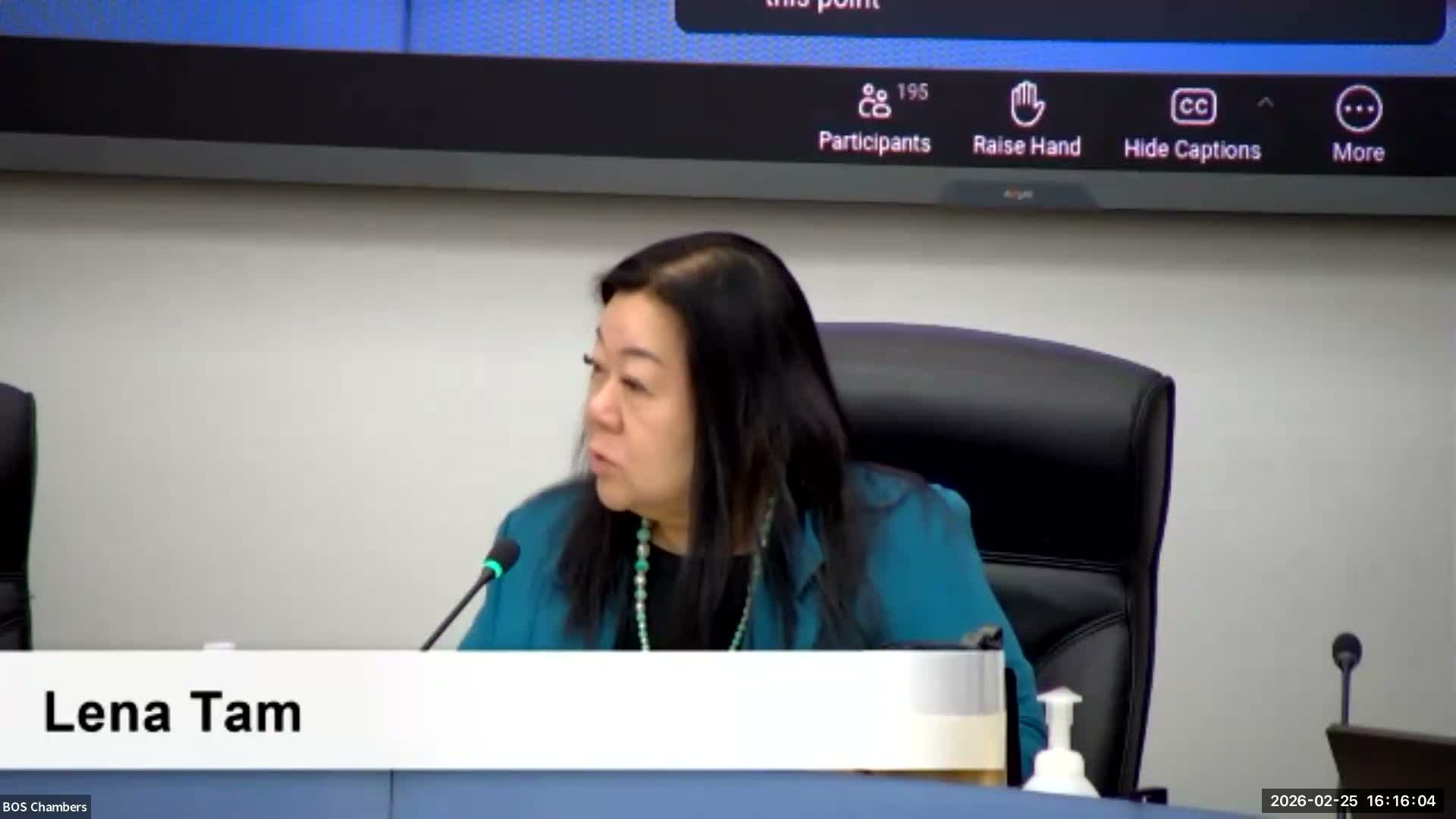
Alameda County supervisors on Feb. 25 heard a presentation from Alameda Health System (AHS) leaders laying out a budget shortfall and a proposed reduction in force that AHS described as 211 positions, and they took hours of public testimony from union leaders, physicians and current patients who warned the cuts would damage patient care.
AHS CEO James Jackson told the Board the system faces “unprecedented” fiscal pressures tied to federal legislation and other payment changes and that roughly 60% of AHS’s patients are covered by Medi‑Cal. Kim Miranda, AHS’s chief financial officer, described year‑to‑date operating results near breakeven but said January results increased the year‑to‑date deficit; she showed a line‑of‑credit projection that, under current assumptions, would reach the board‑authorized maximum this summer.
The presentation and subsequent remarks described a menu of proposed changes: targeted closures, program reductions and system‑wide “rightsizing.” AHS listed seven services as closures or reductions and proposed program‑level changes including the Fairmont retail cafeteria, a systemwide suspension of the TeleSitter virtual‑observation program, and reductions or closures affecting behavioral‑health programs and community navigation staff. AHS’s human resources director said two voluntary separation programs produced 74 participants and that notices were issued with an effective separation date of March 9 for impacted employees.
Why it matters: Supervisors were repeatedly warned by physician leaders, clinical staff and patients that the proposed changes could affect core, time‑sensitive services. Multiple clinicians said cuts to lab assistants, surgical and anesthesia coverage, and outpatient behavioral‑health programs risked the county’s only Level‑1 trauma capability and would shift costs and patient volume to emergency departments, jails and other systems.
Union pushback and clinician testimony: SEIU representatives and a coalition of 332 physicians urged the Board to demand greater transparency from AHS and to explore alternatives. Union field director Peter Masiak said the union had identified roughly $29 million in potential savings that AHS had not fully investigated. Several physicians testified that the proposed reductions and related hiring freezes have already strained services such as vascular surgery coverage and anesthesia, with consequences for trauma, cardiac and obstetric care.
AHS response: AHS leaders repeated that the decisions are difficult and aimed at preserving core, medically necessary services. On contested items, AHS offered explanations: the CEO and CFO said some federal and state impacts will materialize over time and that some payouts (described by unions as bonuses) were triggered by prior‑year performance metrics. AHS said it would continue impact bargaining and vet union proposals through its organizational‑transformation unit.
Board action and next steps: After nearly 4½ hours of testimony and questioning, the Board voted to close the public‑comment period on the agenda item and continue deliberations at a special set meeting on March 3 at 2 p.m. Supervisor Miley signaled he would ask the county to consider a short bridge payment (he suggested at least $10 million as a potential stabilizing amount) and proposed forming a working group with county officials, AHS leadership and labor to explore options for the next two fiscal years. The motion to continue carried unanimously.
What’s unresolved: AHS and labor offered different counts of impacted positions and different timelines at various points in the record; the exact final headcount and the details of any county bridge funding remained to be resolved when the Board reconvenes.
Sources: County staff letter and attachments read into the record; presentations by James Jackson (AHS CEO), Kim Miranda (CFO), Jett Chapman (CHRO); testimony by SEIU representatives, the Alameda Health System medical executive committee, and more than 100 members of the public.