Get Full Government Meeting Transcripts, Videos, & Alerts Forever!
Get email alerts on the Public Health topic
No spam. Unsubscribe anytime.
Cole County approves EMS distribution of infant ‘safe-sleep’ kits as pilot program
Summary
County health department staff and EMS described a pilot where EMS crews will carry safe-sleep kits (sleep sack, fitted sheet, pacifier, education) for infants found in unsafe home-sleep situations; the kits are funded through existing safe-crib and maternal-child health contracts.
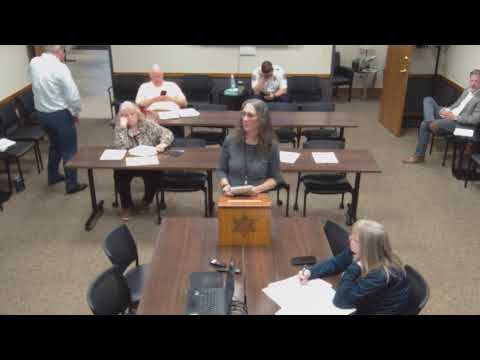
County health officials and EMS on April 7 described a new pilot to equip emergency crews with safe-sleep kits for infants found in unsafe home environments.
Health department staff said the kits include a wearable sleep sack, a fitted sheet and educational information and will be distributed by EMS when crews encounter an infant who lacks a safe separate sleep space. “The safest place for them to sleep is alone,” a presenter said during the commission meeting, arguing that the program pairs immediate equipment with in-home education.
Officials said funding for the kits comes from existing contracts, including the county’s safe-crib program and a maternal-child health contract; no new county appropriation was announced. EMS staff described training aids ("badge buddies") for crews to prompt conversations about safe sleeping practices and said kits will be staged on battalion chief vehicles so crews can both drop off a kit and provide brief education during a call.
Commissioners and staff described the approach as a low-cost, proactive community-risk-reduction measure that leverages existing 24/7 EMS coverage. Health staff and EMS said the program aims to reduce unsafe-sleep related infant deaths by providing supplies and point-of-contact counseling in homes where those risks are observed.
The commission did not take a separate funding vote at the meeting; staff said the program will use current contract funds and partnerships and will report back as implementation proceeds.