Get Full Government Meeting Transcripts, Videos, & Alerts Forever!
Get email alerts on the Press Briefing Qanda topic
No spam. Unsubscribe anytime.
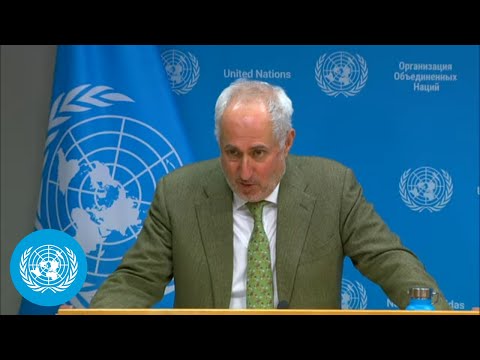
UN spokesman fields questions on envoy visits, Israel–Lebanon talks, Strait of Hormuz and DPRK launches
Summary
During the press briefing the UN spokesperson answered reporters about Jean Arnault's meetings in Tehran (he met with Majid Takht Ravanchi), welcomed any country playing a positive mediator role including China and Pakistan, reiterated the UN stance that international waterways must allow freedom of navigation, and said the UN 'stands against all launches' by the DPRK.
Reporters used the briefing to press the United Nations on ongoing diplomatic and security developments.
Edith Lederer asked who Jean Arnault met in Tehran; the spokesman said Arnault had substantive meetings with senior officials and that he met the deputy foreign minister, Majid Takht Ravanchi, and expected to remain in Tehran a bit longer as consultations continue. When pressed on whether the deputy foreign minister represents Iran's decision-making, the spokesman said Arnault met senior officials the UN had asked to meet and declined to offer further detail on the substance of ongoing discussions.
A reporter identified as 'Benny' followed up on Arnault's representativeness and the spokesman repeated the deputy's name but did not characterize the Iranian leadership's makeup beyond noting senior-level meetings.
Stefano asked whether it would be legal for Iran to charge a toll in the Strait of Hormuz; the spokesman replied that international law provides for "full and unhindered freedom of navigation" in international waterways and said the UN "doesn't like this idea." The spokesman observed that waters in the Strait are shared with Oman.
On reports that Israeli Prime Minister Benjamin Netanyahu had deputized officials to hold direct talks with Lebanon, the spokesman said the UN would welcome direct negotiations between Israel and Lebanon for the sake of both countries but that he had only just seen the report and did not know whether UNIFIL would participate.
Linda asked about recent short-range ballistic missile launches by the Democratic People’s Republic of Korea; the spokesman said the UN "stands against all launches of missiles from the DPRK" and that the UN position has been unchanging.
Farnoush asked about Arnault's discussions with the Iranian Red Crescent and whether the UN had independent casualty figures; the spokesman said Arnault visited destroyed sites and that the Red Crescent had public figures; the UN did not have different figures to report. When asked about China's role in helping secure the ceasefire, the UN welcomed any country that can play a constructive role.
Abdulhamid raised the assassination of Al Jazeera journalist Mohammad Weishaah and broader journalist casualties in Gaza; the spokesman said the UN continues to condemn killings of journalists and spoke to the organization's position on those incidents. Abu Sufian asked about ongoing diplomacy, including US–Iran direct talks and Pakistan's mediator role; the spokesman urged diplomacy and welcomed Pakistan's contribution to bringing parties toward ceasefires and talks.
The spokesperson said the UN would provide further updates as diplomatic engagements develop and as they receive additional readouts.