Get Full Government Meeting Transcripts, Videos, & Alerts Forever!
Get email alerts on the Energy Policy topic
No spam. Unsubscribe anytime.
Nominee for EERE vows to partner on rural Alaska energy solutions
Summary
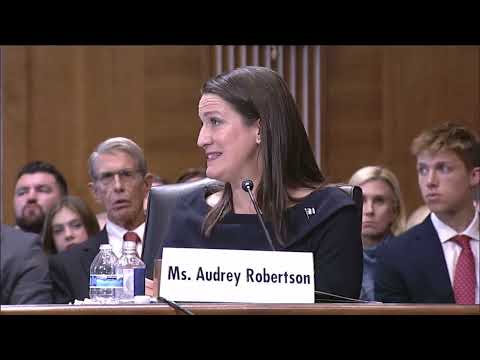
At a Senate confirmation exchange, a senator pressed the nominee for Assistant Secretary of Energy for Energy Efficiency and Renewable Energy to help rural Alaska move off diesel; the nominee described prior microgrid experience and pledged to work with local communities and tribal partners.
Senator Marcowsky pressed the nominee for Assistant Secretary of Energy for Energy Efficiency and Renewable Energy during a confirmation hearing on the federal role in addressing energy insecurity in isolated communities.
The senator said his state’s grid is "islanded" beyond the rail belt and described villages that rely on diesel barges or flown-in fuel to keep lights on and homes heated. He told the nominee that a modest extension in wind and solar tax credits made in recent reconciliation legislation could enable some projects, and that a White House executive order issued earlier in the week "really guts" that compromise, leaving those communities with "no solution other than barging in or flying in more diesel." He asked directly, "So can you commit to me that you're going to work with us on some of these solutions?" (Senator Marcowsky).
The nominee responded by saying they value Alaska and its unique constraints and pledged partnership. "I absolutely commit to you to work as a partner in figuring out the right energy solution for that very unique environment," the nominee said, describing previous work building a microgrid in rural New Mexico after the community lacked central power. The nominee said their private-sector experience included on-site treatment of field gas and use of gas-fired turbines to build a local microgrid when utility timelines were long.
The senator also raised concern about the president’s budget proposal to eliminate the federal weatherization program, saying weatherization matters both in cold climates and in very hot regions. The exchange closed when the senator's time expired; he suggested staff contact Mr. Eisner about Alaska natural gas opportunities.
The hearing did not record a formal vote or a policy decision; the nominee’s pledge is a commitment to engage rather than a binding policy change. Follow-up work on site-specific solutions, tribal consultation on geothermal opportunities and the status of federal weatherization funding were left as next steps.