Get Full Government Meeting Transcripts, Videos, & Alerts Forever!
Get email alerts on the Zoning topic
No spam. Unsubscribe anytime.
Lapeer holds first reading on sign code changes as commissioners debate Reed v. Gilbert implications
Summary
On a first reading of ordinance 2026‑02, commissioners debated whether the sign code should prioritize minimizing outdoor advertising or adopt strictly content‑neutral language to comply with the U.S. Supreme Court’s Reed v. Gilbert decision; staff will revise language for the March 16 second reading.
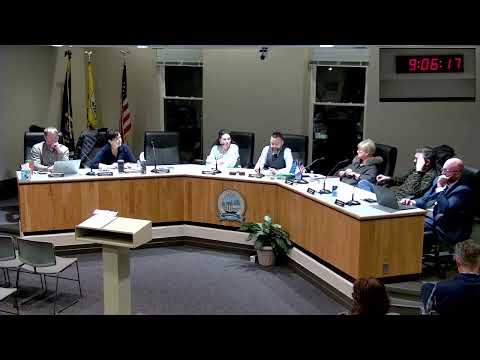
The Lapeer City Commission on March 2 conducted a detailed first reading of proposed text amendments to Article 7.17 of the zoning code (Ordinance 2026‑02), which would update the city’s sign regulations. The meeting featured extended discussion of the ordinance’s purpose language, temporary sign limits and maximum sizes, and how to preserve community character while complying with federal case law.
Commission discussion: Several commissioners said the redrafted purpose language now emphasizes content neutrality to conform with the U.S. Supreme Court’s Reed v. Gilbert decision, which requires neutral treatment of signs and careful limits on regulation that target message content. Commissioner McCarthy and others asked why the code’s earlier purpose line — to minimize outdoor advertising — had been removed or moved to a lower sub‑section; they worried the change could make the ordinance less protective of community aesthetics. Staff and counsel explained that expressly labeling a sign as “advertising” may require reading a sign’s content and could render the regulation content‑based under Reed. Counsel suggested moving related language to a less prominent subsection and drafting clearer neutral standards for size, number and location.
Specific provisions under scrutiny: Commissioners questioned proposed temporary sign rules (a 30‑day display, not to exceed 90 days per calendar year), table changes to maximum sign sizes (the redline/redraft format made some edits hard to follow in the packet), and the reclassification of “historical” plaques as “commemorative” with a six‑square‑foot size cap. Commissioner McCarthy requested staff and counsel rework the draft for clarity and return with a revised version on the second reading (March 16), and staff said substantial changes might require additional planning commission review.
Why it matters: Sign regulations affect election‑period political signage, neighborhood character, and local business visibility. Commissioners emphasized balancing First Amendment constraints with local goals for aesthetics and safety (including driver distraction concerns). Several commissioners urged clearer tables and plain‑language formatting so staff and the public can readily understand what is—and is not—allowed.
Next steps: The commission approved the first reading and scheduled a second reading for March 16, 2026. Staff will work with legal counsel on revisions addressing content neutrality while preserving measures to limit sign quantity and size. If revisions are substantial, staff said the draft may return to the planning commission for further recommendation.