Get Full Government Meeting Transcripts, Videos, & Alerts Forever!
Get email alerts on the Legal Engagement topic
No spam. Unsubscribe anytime.
Lapeer commission approves Bodman PLC invoice, names mayor sole liaison amid sharp debate over transparency
Summary
The Lapeer City Commission approved a $1,311.75 invoice from outside labor counsel Bodman PLC and then voted to name the mayor the commission’s sole contact for the firm, prompting heated debate about who may authorize work and how attorney‑client privilege affects transparency.
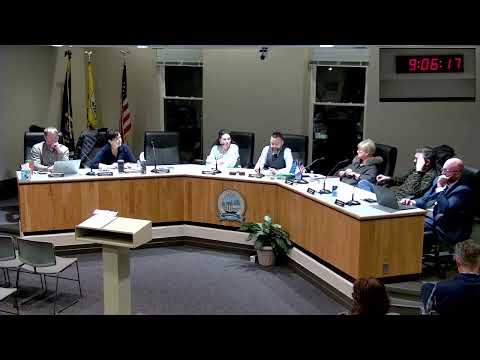
The Lapeer City Commission voted March 2 to approve an outside‑counsel invoice and to designate the mayor as the commission’s single point of contact for the firm, a pair of actions that exposed sharp divisions over transparency and who speaks for the body.
Commissioner Petri moved to approve the Bodman PLC billing for Feb. 18, 2026, for an amount “not to exceed $1,311.75,” and the commission authorized the finance director to process payment. The vote carried after a roll call in which Commissioner Brady voted no and others voted yes. Immediately afterward, Petri moved to designate the mayor as “the commission’s sole authorized contact for directing the work and correspondence of Bodman PLC,” a motion supporters described as a practical step to limit duplicated billable contacts and to conserve the commission’s professional services budget. That motion also carried on roll call with Commissioner Brady in opposition.
Why it mattered: Several commissioners and members of the public said they were concerned that work appeared to have begun after a Dec. 15 engagement authorization without the full commission reviewing drafts or deliverables. Commissioner Brady pressed staff and counsel for details about who directed the firm and whether staff or individual commissioners had given substantive instructions; he argued that the body, not a single official, should decide major next steps.
Counsel and staff responses: City attorney advisors told the commission they had differing interpretations of the word “execute” in the December engagement — one reading limited it to signing, another allowed short, preliminary calls to scope the work. Outside and in‑house counsel emphasized that attorney‑client privilege can prevent disclosure of the content of privileged communications in a public meeting, but that commissioners may receive privileged information individually and may later discuss it only as permitted by law. Mr. Francis (counsel in the room) said he could not discuss details publicly because of privilege.
What residents said: Several speakers who returned during the public‑comment period urged more transparency and said the commission should either require written deliverables before paying invoices or hold a closed session so commissioners can review privileged work. Vindy Schwab, a taxpayer attendee, said she feared an open $10,000 authorization could let the city “pay for something before we know what it is.”
What the commission did: In addition to approving the single invoice, the commission voted to route all future commissioner questions and requests about the Bodman engagement through the mayor so the firm receives a single contact point. Supporters said the approach prevents multiple billable inquiries, while opponents said it concentrates coordination authority and could short‑circuit the commission’s role as a deliberative body.
Next steps: Commissioners discussed scheduling a closed session to review privileged work and to get up to speed; the mayor and counsel said they would coordinate options and that a two‑thirds vote is required to move into a closed session when the subject is consultation with counsel.
Ending: The commission did not reverse the prior authorization for outside counsel; it approved the invoice under the earlier $10,000 authorization and established the mayor as the contact for future Bodman communications, while several commissioners and members of the public signaled they plan to press for a fuller review in closed session.