Get Full Government Meeting Transcripts, Videos, & Alerts Forever!
Get email alerts on the Chemical Safety topic
No spam. Unsubscribe anytime.
CSB report says regulatory gaps and company failings contributed to fatal Bell, W.Va., chemical-plant explosion
Summary
A U.S. Chemical Safety and Hazard Investigation Board report says a December 8, 2020, explosion at the Optimabell tolling facility in Bell, West Virginia, that killed one worker stemmed from missing process knowledge, poor equipment selection and inadequate regulatory coverage of reactive chemicals; the CSB urged OSHA and the EPA to act.
A U.S. Chemical Safety and Hazard Investigation Board (CSB) report released in a video summary says gaps in federal regulation and failures by companies involved in a batch dehydration operation contributed to an explosion at the Optimabell tolling facility in Bell, West Virginia, on Dec. 8, 2020, that killed one employee and sent others for medical evaluation.
The CSB said Optimabell was performing a tolling dehydration of a chlorinated compound called CDB56 on behalf of Clearon Corporation to produce CDB63. The board found Clearon supplied a technology package that did not include critical information about CDB56’s thermal behavior and that both Clearon and Optimabell failed to identify and mitigate a runaway decomposition hazard.
Why it matters: The board concluded that, had the companies had complete process knowledge and carried out standard reactive-hazard screening and laboratory thermal testing before scaling to full production, they could have designed safer equipment and controls to prevent the runaway reaction. The CSB also said federal regulations do not consistently cover many reactive chemicals and therefore may leave communities at risk.
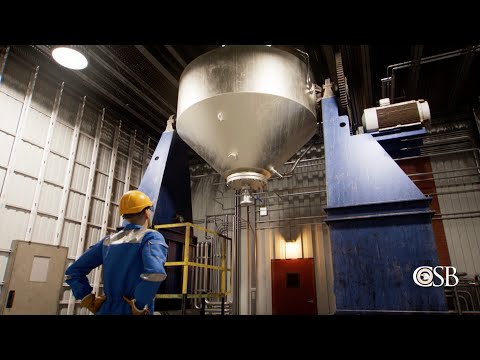
What happened: According to the CSB summary, workers performed the first of four planned batches, heating CDB56 in a rotary double-cone dryer while applying vacuum to remove vapor. Operators noted operational problems late in the day, paused the dryer, and later restarted rotation and applied steam to the jacket. Samples taken that evening showed moisture had not decreased and the material contained dark specks; when workers inspected the dryer they reported the material looked lumpy, had a yellow tint and smelled of chlorine, while internal temperatures continued to rise despite no steam being applied.
The CSB said a runaway decomposition then accelerated rapidly, causing temperature and pressure to spike; the dryer exploded, metal fragments scattered as far as a half mile, a nearby methanol pipe ruptured and ignited, one Optimabell employee died, two workers were evaluated for respiratory irritation and one member of the public reported an injury.
Key technical findings: The board reported that Clearon’s safety data sheet listed CDB56 decomposition between 240–250°C, but said historical testing by a Clearon predecessor — information that Clearon retained but did not include in its technology package — showed decomposition could begin at much lower temperatures. Post-incident testing cited by the CSB indicated CDB56 could begin a runaway decomposition at about 81°C. "This long-standing safety gap must be addressed," the CSB said in the video summary.
The CSB identified five major safety issues: insufficient process-knowledge management (missing test data and incomplete information transfer between parties); inadequate thermal-hazard and reactivity screening; equipment not redesigned or sized for the new process (including insufficient pressure relief and cooling capacity); shortcomings in tolling arrangements and information exchange among Clearon, a tolling broker and Optimabell; and gaps in federal regulatory coverage for reactive chemicals.
Recommendations and regulatory call: The CSB recommended Clearon develop and implement a comprehensive process-knowledge management program and update CDB56 safety information. The board reissued a prior 2002 recommendation asking OSHA to amend its Process Safety Management standard and urged the Environmental Protection Agency to revise the Risk Management Program rule to explicitly cover catastrophic reactive hazards. "The time is now for those agencies to act," the CSB said.
Context and next steps: The CSB noted it has a long history of investigating reactive-chemical incidents and said neither OSHA nor EPA has yet implemented its prior recommendations. The video closes by directing viewers to the CSB website for the full report and supporting materials. The CSB did not announce any regulatory action; its video summarizes the investigative findings and recommendations.