Get Full Government Meeting Transcripts, Videos, & Alerts Forever!
Get email alerts on the Land Use Laundromat topic
No spam. Unsubscribe anytime.
Planning commission deadlocks, upholds director denial of proposed 7,000‑sq‑ft laundromat on Twitty Boulevard
Summary
The South Gate Planning Commission split 2–2 on an appeal over whether a proposed 7,000‑sq‑ft self‑service laundromat should be classified as a permitted personal‑service use. The tie left the director’s denial intact; the applicant may appeal to city council.
A divided South Gate Planning Commission on Wednesday left in place a director’s decision that a proposed 7,000‑square‑foot self‑service laundromat on Twitty Boulevard is not a permitted use under the city’s current specific‑plan zoning.
Community Development Director Gabriel Pettis told commissioners the code currently distinguishes ‘laundry agency’ (a drop‑off operation under 2,500 sq ft) and a larger ‘laundry plant’ (facilities that process third‑party items or exceed 2,500 sq ft). The applicant’s proposal for 4–7 contiguous storefronts at 4382–4390 Twitty Boulevard exceeds that 2,500‑sq‑ft threshold, and staff concluded it more closely resembles a laundry plant, a use not allowed in the Tweety Boulevard mixed‑use zone the commission reviews.
“The code has ambiguity,” Pettis said during the staff presentation, adding that staff would recommend a code amendment to expressly define laundromats and a separate conditional‑use process. “If the laundromat term were in the code, it would be easier to decide.”
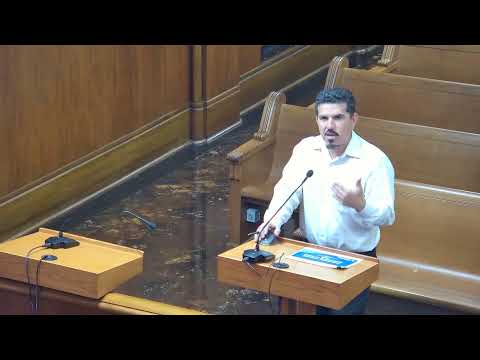
The applicant, represented by architect Dimmitri Kazakov, said the operation is a modern, attended self‑service laundromat and should be treated as a personal‑service use — the same category that covers fitness centers and salons. Kazakov said he and the business owner, Eric Baroo, relied on prior staff interactions when they signed a 10‑year lease and invested hundreds of thousands of dollars in predevelopment costs.
“We were told the laundromat is permitted,” Kazakov said. Owner Eric Baroo described roughly $3 million in total committed project costs and said the facility would bring machines, staff and foot traffic that could revive a long‑vacant storefront block.
Neighbors and business representatives were split. Samuel Narfan of Reliable Properties and other local supporters cited vacancy and demand on Twitty Boulevard and urged the commission to allow the use. Kumut Patel, owner of Fiesta Coin Laundry across the street, opposed the proposal and raised parking and competition concerns.
Commissioners debated whether the facility fits the code’s existing categories or whether the commission should treat it as a personal‑service use. After discussion, a motion to treat the appeal as a finding that the use qualified as personal services and to return a resolution approving it passed and was seconded, but roll‑call voting resulted in a 2–2 tie: Vice Chair Pto and Chairperson Ree voted to overturn the director; Commissioners Valenuela and Osetta voted to uphold staff. With the tie, the director’s determination stands.
Gabriel Pettis told the applicants the tie leaves staff’s classification in place but that the applicant may appeal the commission’s non‑action to the City Council; staff also reiterated it is preparing a code amendment to clarify laundromat definitions citywide.
What happens next: The applicant may file an appeal to city council within the statutory appeal period after formal notice; staff said a code amendment that would expressly define laundromats and set any separation or CUP requirements will take months to prepare and adopt.
The commission’s decision focused on how the 2015 zoning rewrite removed the explicit “laundromat” use, leaving ambiguity between “laundry agency,” “laundry plant,” and broader “personal services.” The applicant argued the city’s historical practice suggested the use should be allowed; staff said the record contains no binding written assurances and noted the municipal code as written does not clearly permit a >2,500‑sq‑ft self‑service facility in that specific plan zone.
The commission’s record shows the matter raised both legal/interpretive questions about code language and practical concerns — parking, neighborhood effects and whether a large coin‑operation should be treated like a plant or a retail service.
Commissioners and staff said the most durable fix will be a code amendment that defines laundromats and sets appropriate conditions or separation standards for Twitty Boulevard, rather than relying on individual appeals.
Ending: The planning commission left the director’s termination in place after the tie; the applicant may pursue appeal to the city council.