Get Full Government Meeting Transcripts, Videos, & Alerts Forever!
Get email alerts on the Literacy Assessment topic
No spam. Unsubscribe anytime.
Blue Springs R‑IV details K–5 literacy plan and readies a new state‑approved foundational screener
Summary
Cassie Ginglebach, director of elementary education for Blue Springs R‑IV, told the board the district will keep NWEA MAP Growth for student growth measures but must select a state‑approved foundational reading screener for 2026–27 after NWEA’s foundational measure was not included on the state list.
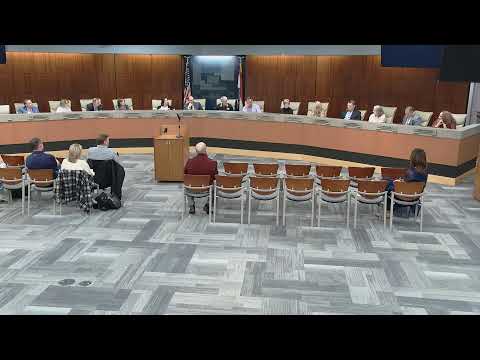
Cassie Ginglebach, the district’s director of elementary education, told the Blue Springs R‑IV board on March 1 that the district’s K–5 literacy plan centers on three coordinated supports: the Pathways K–2 student curriculum, 'Letters' teacher training cohorts, and revised K–5 reading and writing units aligned to Missouri learning standards.
Ginglebach said Pathways provides daily, student‑facing instruction aligned to the science of reading, while the Letters program — now entering its fourth cohort — gives teachers the foundational knowledge to diagnose and intervene. "Pathways tells teachers what to teach and when; Letters gives them the why," she said.
Why it matters: the district must choose a new state‑approved foundational screener for 2026–27 after a recent state list excluded the NWEA foundational measure the district had used as its screener. That change comes under requirements established by Senate Bill 681 (2022), which Ginglebach cited as the statute governing reading success plans for students who are not meeting benchmark expectations.
Ginglebach told the board the district will retain NWEA MAP Growth for K–10 growth and comprehension measures, while selecting a different vendor from the four assessments the state approved for foundational screening. "We are keeping MAP Growth for growth data; we simply must pick a state‑approved foundational screener for next year," she said.
Board members asked whether the four approved vendors align with existing instruction and whether adding or changing an assessment would increase testing time in classrooms. Ginglebach said the state presented four vendors and that district teams have heard presentations from all of them; one vendor in particular looks closely aligned to the district’s instructional model. She also said the student testing time should not materially increase because the district already administers a foundational screener, though staff anticipate a learning curve and plan professional development so teachers can administer and use the data effectively.
Members expressed frustration that the state’s decision forced the district to change a familiar screener. One member recalled district lobbying last year to retain NWEA’s foundational tool and described the state’s later decision to remove it from the approved list as disruptive. The board discussed concerns about frequent, unfunded changes from the legislature.
Ginglebach closed by highlighting instructional resources in Title I schools: the district has used 'Just Right Reader' decodable texts and take‑home packs to align classroom phonics practice with student reading material at home. She said those resources and the combined Pathways/Letters approach aim to give teachers the tools to set appropriate reading goals and interventions.
The board did not take formal action at the work session. Staff said they will select a screener from the state list and bring recommendations and implementation plans, including required professional development, to a future board meeting.
Sources: Presentation and Q&A with Cassie Ginglebach at the March 1 work session; statutory reference to Senate Bill 681 cited in the session.