Get Full Government Meeting Transcripts, Videos, & Alerts Forever!
Get email alerts on the Zoning Duplex Triplex topic
No spam. Unsubscribe anytime.
Glenwood Springs planning panel recommends code changes to allow duplexes, triplexes with spacing buffers
Summary
The Planning & Zoning Commission voted 4–2 on March 10 to recommend zoning-text amendments that would allow duplexes and a newly defined triplex category in specified residential zones, add 250– and 350‑foot buffers and require one triplex unit in RM1 be deed‑restricted for local workforce occupancy.
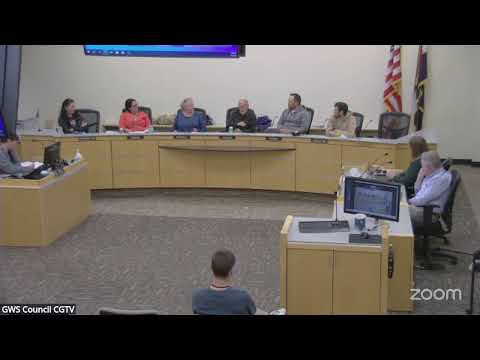
GLENWOOD SPRINGS, Colo. — The Glenwood Springs Planning & Zoning Commission voted 4–2 on March 10 to recommend that City Council amend municipal zoning rules to allow duplexes and a newly defined triplex category in parts of the city, adopting spacing buffers and a workforce deed‑restriction intended to slow the pace of neighborhood change while increasing housing supply.
Staff member Watkins told the commission the changes implement recommendations from the city's 2023 Strategic Housing Plan and are intended to support infill housing. "We face a shortage of approximately 1,300 dwelling units," Watkins said, and the proposal would let property owners create up to three units on lots now zoned for single‑unit housing in some places while placing limits on where and how quickly those units can appear.
Under the draft text, triplexes would be carved out as their own use and — for the first time — allowed in the RM1 zone by a new administrative review. Staff proposed allowing duplexes in the RR and RL zones through administrative review (or by special use permit at the commission's discretion) and permitting duplexes in RM1 either by administrative review or special use permit. To limit clustering, the staff proposal adds a 350‑foot buffer between approved duplexes in RR and RL, and a 250‑foot buffer in RM1.
The proposal also ties a workforce deed‑restriction to triplexes in RM1: "one unit will have to be deed restricted for resident occupancy," Watkins said. Staff said the deed restriction would prioritize local‑workforce occupants, define residency as working at least 32 hours per week and occupying the unit roughly nine months a year, and be enforced through annual owner affidavits and reporting handled by the city's housing staff and housing development manager.
Parking requirements were not changed in the proposal. Watkins told the commission that the code's existing parking ratios — 1.5 spaces per unit (three spaces for a duplex) and the corresponding calculation for triplexes (six spaces) — remain in force.
Commissioners spent more than an hour questioning staff on details and tradeoffs. Several members cited concerns about demolition of older homes and the potential for changes to neighborhood character. "I also have a lot of concerns about the changing of our neighborhoods," Commissioner Gman said during the discussion. Others pressed staff on public notice, enforcement of deed restrictions, and whether the administrative review could effectively be a near‑ministerial approval.
Staff answered that administrative reviews would be decided by the planning director (referred to in the hearing as Hannah) and that administrative approvals would expire after 180 days to prevent speculative holds. Special use permits would continue to go before the commission and include neighborhood notification and a public hearing.
After debate, Commissioner Conon moved to recommend approval of the text amendments to municipal code sections 07.20 and 07.30 as described in the staff memo, adding the commission's findings and recommendations; the motion carried by voice vote, announced as "the motion passes 4 to" with Commissioners Gman and Cly recorded in the transcript as opposing. Staff said it will transmit the recommendation and the commission's concerns to City Council for a final decision.
What happens next
The Planning & Zoning Commission is an advisory body; City Council must still review and adopt any text amendments. Staff told commissioners the current recommendation builds on multiple public outreach efforts in 2023 and a prior council direction to return with a more tightly controlled proposal after public opposition in mid‑2024.
Key details
- Triplexes: new category; proposed only in RM1 and allowed by administrative review; one unit required to be deed‑restricted for local workforce occupancy. - Duplexes: proposed to be allowable by administrative review in RR and RL (350‑ft buffer) and in RM1 by administrative review or special use permit (250‑ft buffer). - Buffers: 350 ft (RR/RL) and 250 ft (RM1), modeled on the city's vacation‑rental spacing rules. - Lot counts cited by staff: 16 RR parcels, 41 RL lots, RM1 contains 988 lots overall and 708 lots that are 7,500 sq. ft. or larger (minimum size cited for duplex/triplex conversions). - Deed‑restriction enforcement: owner affidavits and annual reporting; housing development manager (Kevin) will administer compliance. - Parking: no change to parking ratios in the proposal; triplexes currently carry a six‑space requirement under existing code calculations.
Commissioners and staff noted competing priorities: increasing housing supply and affordability versus protecting neighborhood character and historic fabric. The amendment the commission recommended to Council included the commission's stated findings and concerns, including a request for continued attention to public engagement and design standards. Council will receive the commission's recommendation and the recorded concerns from the hearing.